One of the oldest cities in the world: fabulous Bukhara. Bukhara has many names. The word “Bukhara” echoes the Sanskrit vihara, “monastery”, and the Chinese Bihar, “place of idols”. Legend says that Bukhara was founded by Siyavush, son of an Iranian king, who married the daughter of King Afrasiab, built the Ark fortress here and raised a great city that to this day has not lost its beauty and grandeur.
A city of scholars and merchants
Bukhara grew rich as an oasis on the Zarafshan and a major stop on the Silk Road. Under the Samanid dynasty (819–999) it was the capital of a state that stretched across Central Asia and Iran, and one of the greatest centres of learning in the Islamic world. Later it became the capital of the Khanate, and then the Emirate, of Bukhara, until 1920. Over the centuries the city earned the epithet Bukhoro-i Sharif, “Noble Bukhara”, for its many mosques and madrasas.
UNESCO describes the Historic Centre of Bukhara, inscribed in 1993, as the most complete example of a medieval city in Central Asia, with an urban fabric that has remained largely intact.
The Ark
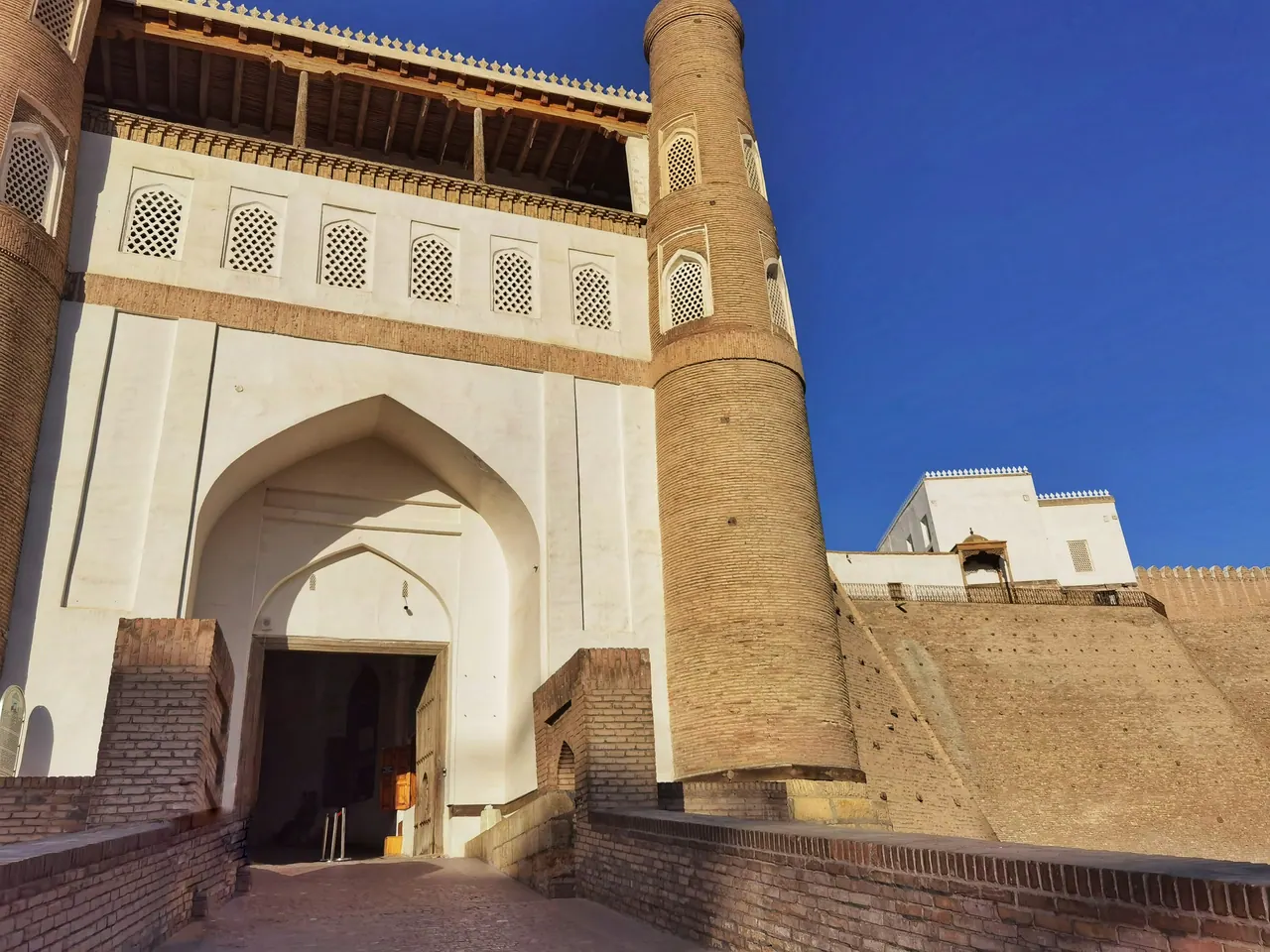
The massive walls of the Ark rise from an artificial mound at the western edge of the old town. For well over a thousand years this was the residence of Bukhara’s rulers, until the last emir fled in 1920. Inside are courtyards, a mosque, a throne hall and museums of local history.
Poi Kalyan
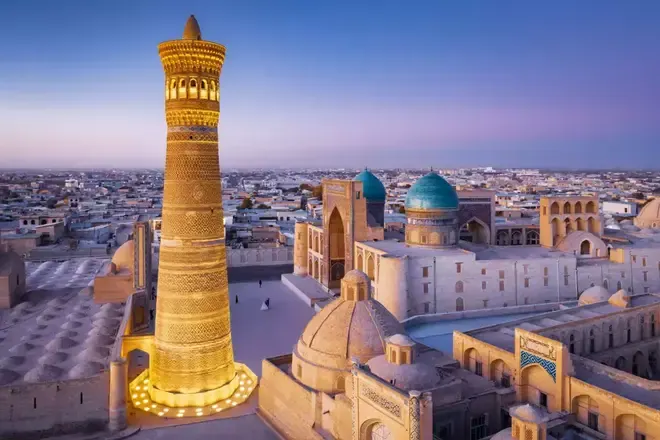
The Poi Kalyan (“foot of the great”) ensemble is Bukhara’s spiritual heart. The Kalyan Minaret, built in 1127 under the Karakhanids, is a masterpiece of decorative brickwork, with bands of different patterns from base to lantern. It faces the vast Kalyan Mosque, rebuilt in the early sixteenth century, and the twin blue domes of the Mir-i-Arab Madrasa from the 1530s, which has worked as a religious school for much of its history.
Lyabi-Hauz and the trading domes
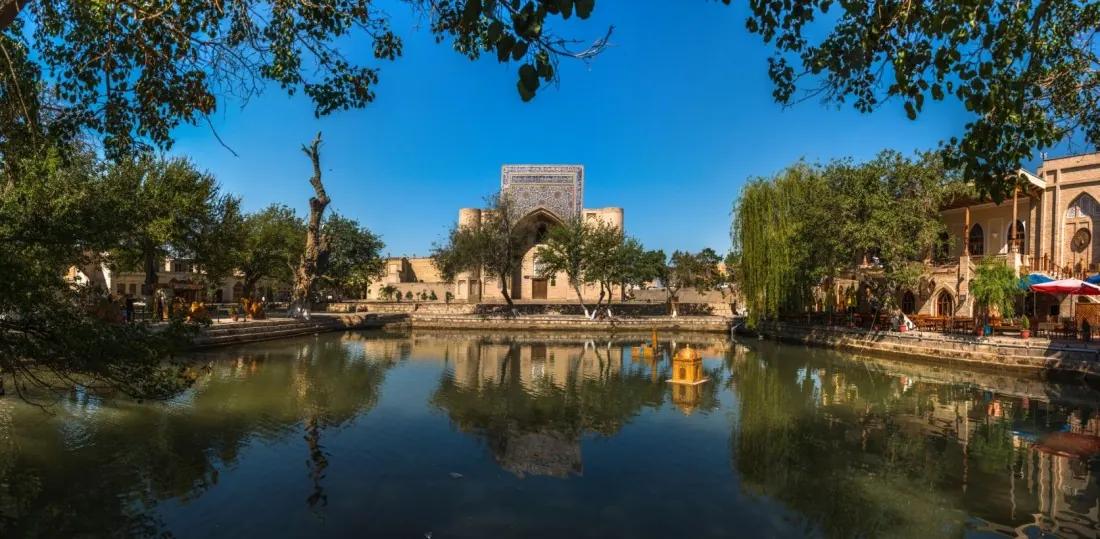
Lyabi-Hauz (“by the pool”) is a square around a pool built in 1620 and shaded by ancient mulberry trees. It is framed by the sixteenth-century Kukeldash Madrasa and by the madrasa and khanaka (Sufi lodge) of Nadir Divan-Begi, whose portal shows two phoenix-like birds and a face in the sun. Teahouses around the pool make it the liveliest meeting place in the old town.
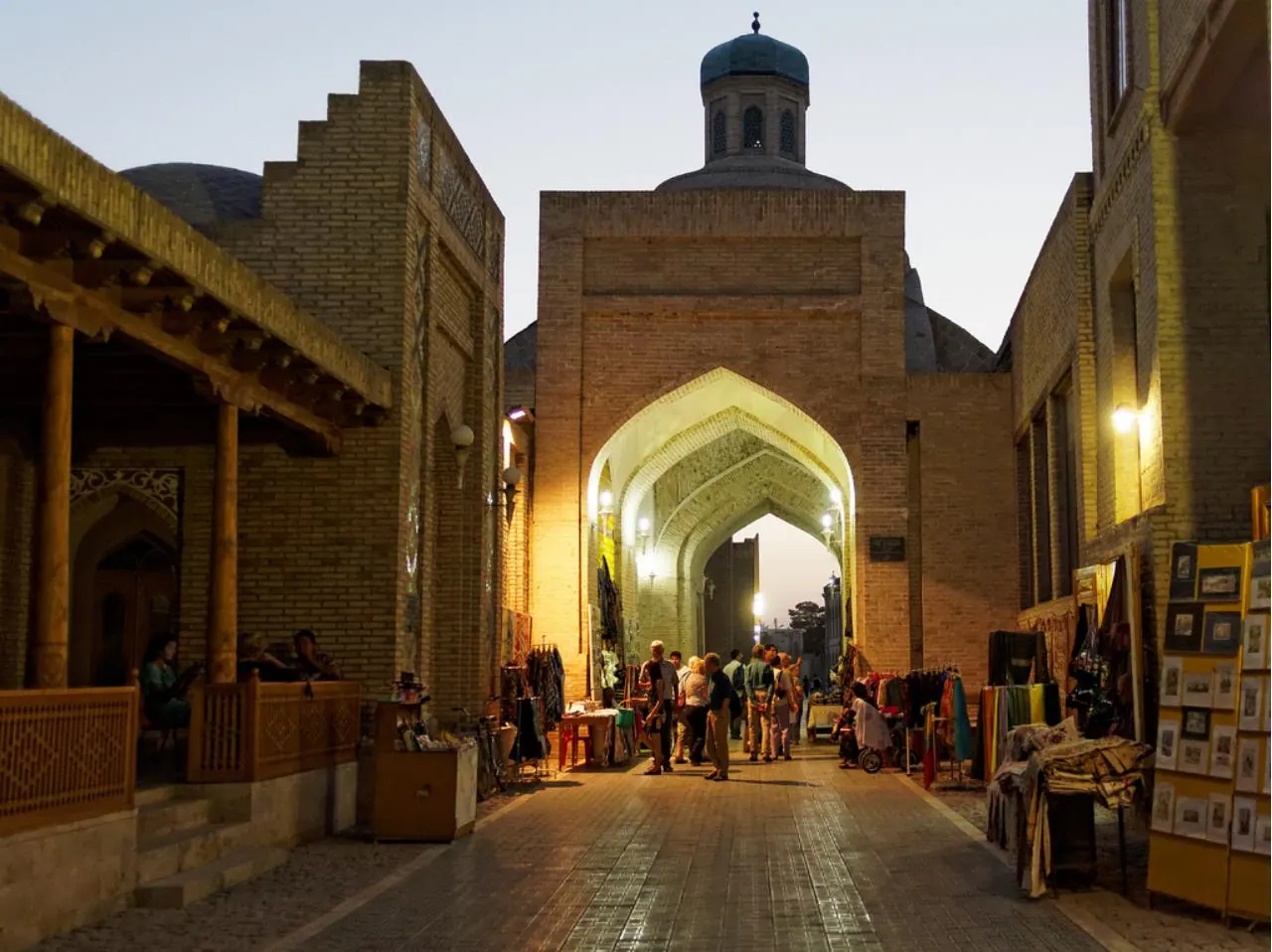
Between Lyabi-Hauz and Poi Kalyan, three sixteenth-century trading domes (toki), Toki Sarrofon, Toki Telpak Furushon and Toki Zargaron, rise over the old street crossings. Originally the domes of money changers, hat sellers and jewellers, they are still full of craftsmen and traders.
The Samanid Mausoleum and Chashma-Ayub
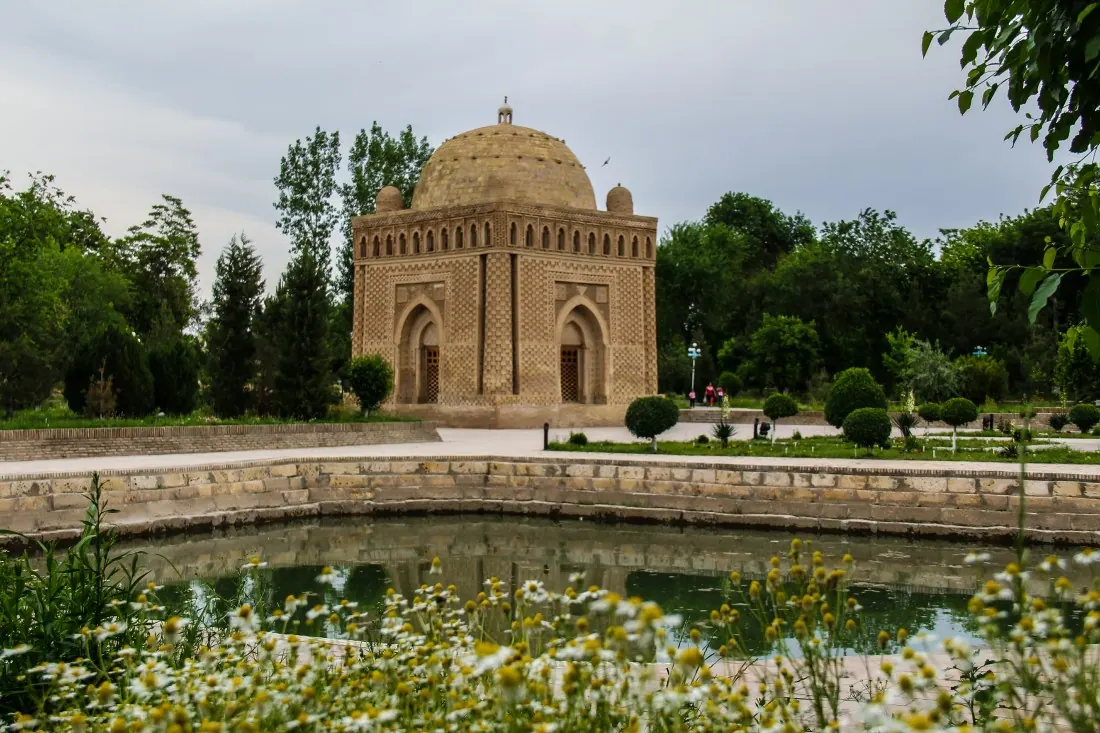
In a park west of the Ark stands the Samanid Mausoleum, the family tomb of the Samanid dynasty from the late ninth or early tenth century. Its walls are made entirely of brick laid in intricate patterns that change with the light. UNESCO calls it the best surviving example of tenth-century architecture in the Muslim world.
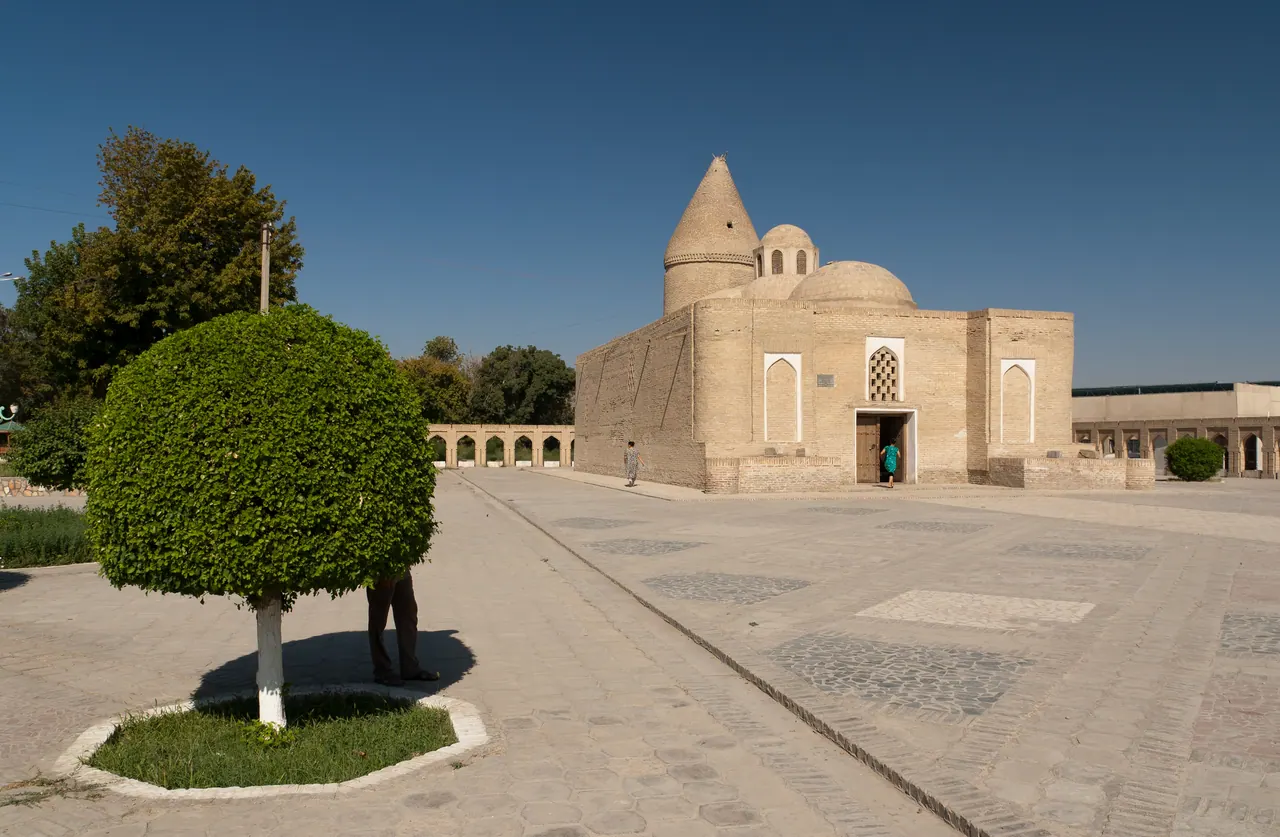
Nearby, the Chashma-Ayub (“Job’s spring”) mausoleum stands over a spring that, according to legend, appeared when the prophet Job struck the ground with his staff. It now houses a small museum of water supply.
The Bolo-Hauz Mosque
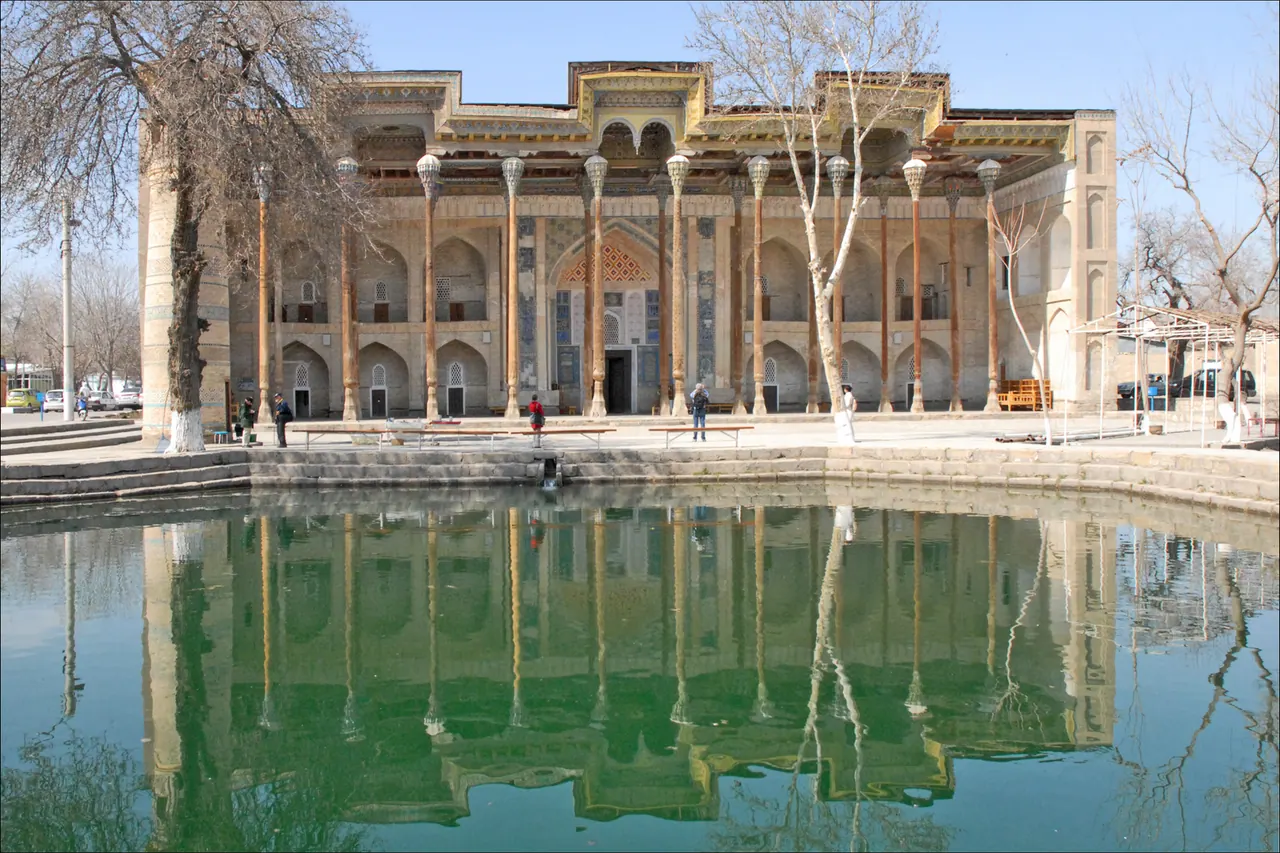
Opposite the Ark, the Bolo-Hauz Mosque (1712) was the Friday mosque of the emirs. Its tall ayvan portico, supported by slender carved wooden columns and a painted ceiling, is one of the most elegant in Central Asia.
Suburban Bukhara
Three remarkable sites lie on the outskirts of the city:
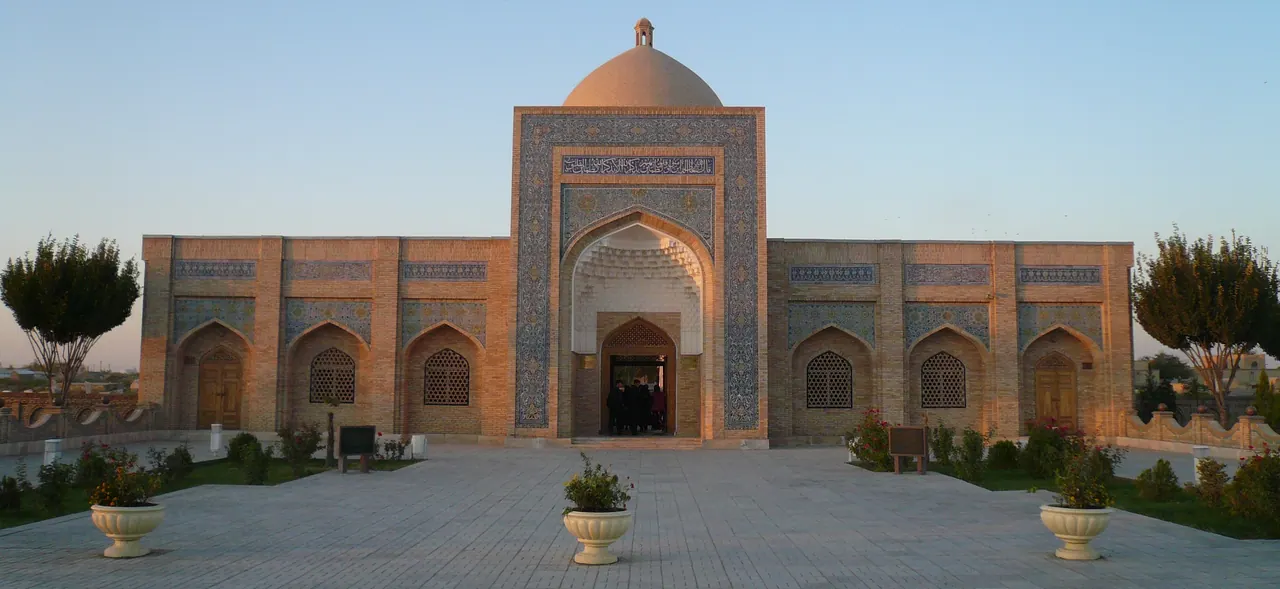
- The Bahauddin Naqshband Complex honours the fourteenth-century founder of the Naqshbandi Sufi order and attracts pilgrims from many countries.
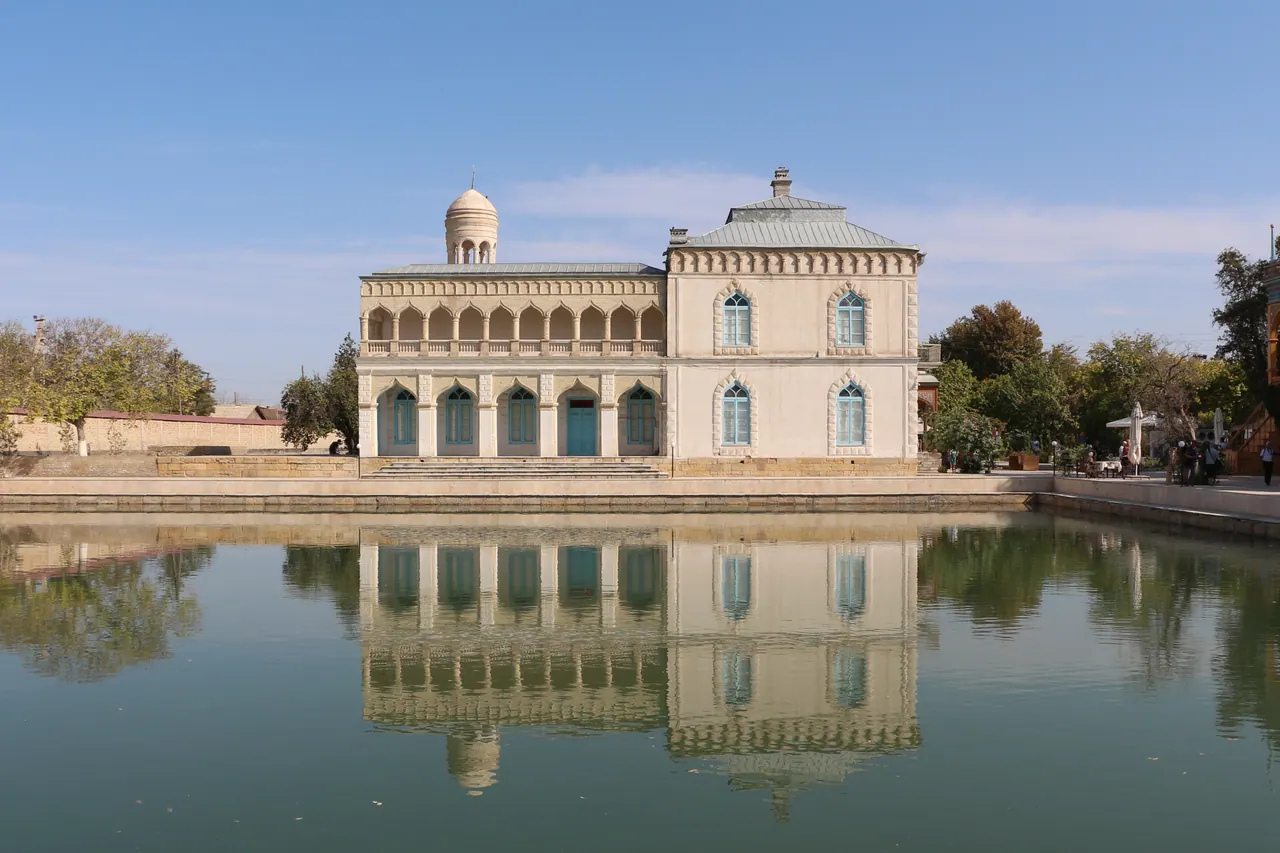
- Sitorai Mohi-Hosa (“palace of moon and stars”) was the summer residence of the last Emir of Bukhara, built in the late nineteenth and early twentieth centuries in a blend of Central Asian and European styles.
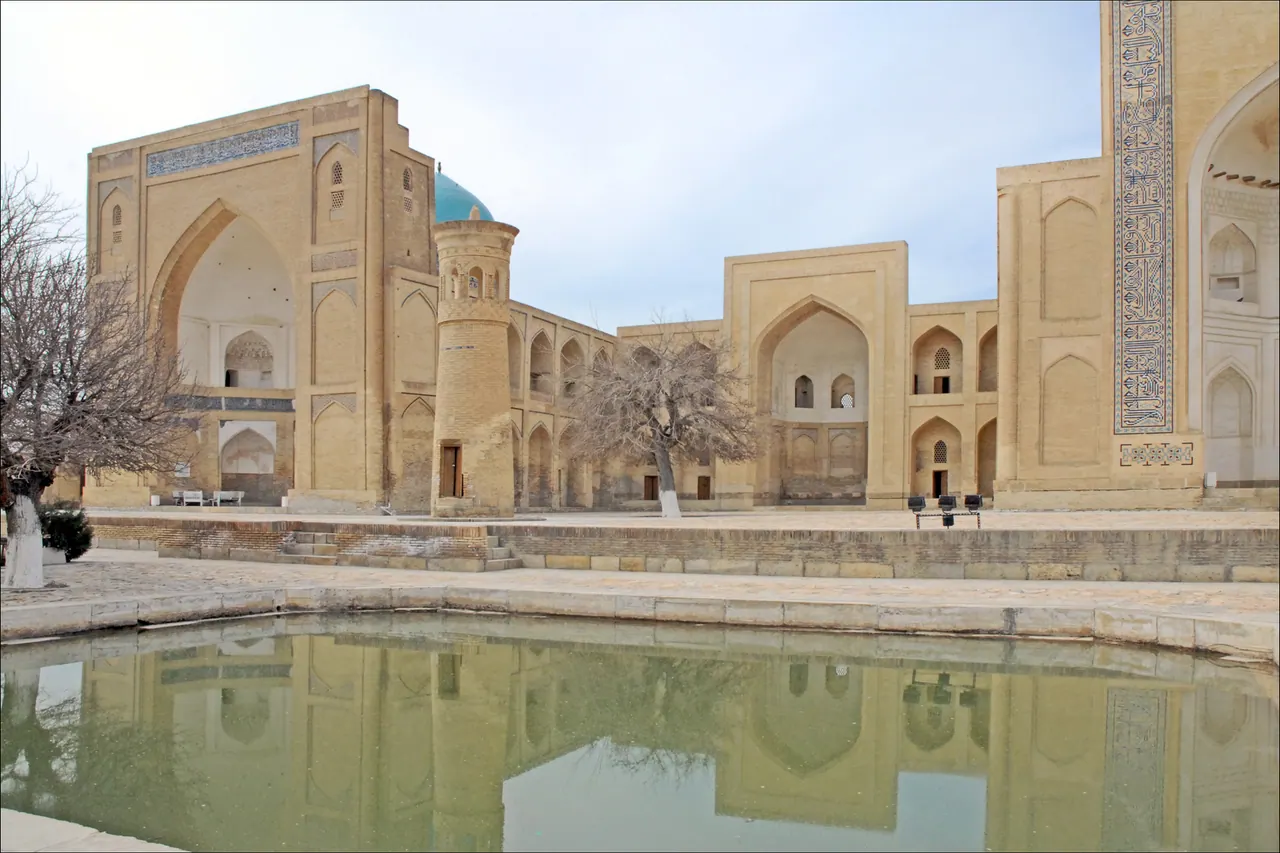
- The Chor-Bakr Necropolis is a walled complex of family tombs, mosques and courtyards associated with a family of influential sheikhs.
Crafts and flavours
Bukhara is known for carpets, gold embroidery, suzani, ceramics, knife-making and miniature painting. Many workshops welcome visitors. Try mashkhurda soup and khanum dumplings, both included in our gastronomic tour.
Visit Bukhara with Turenta Travel
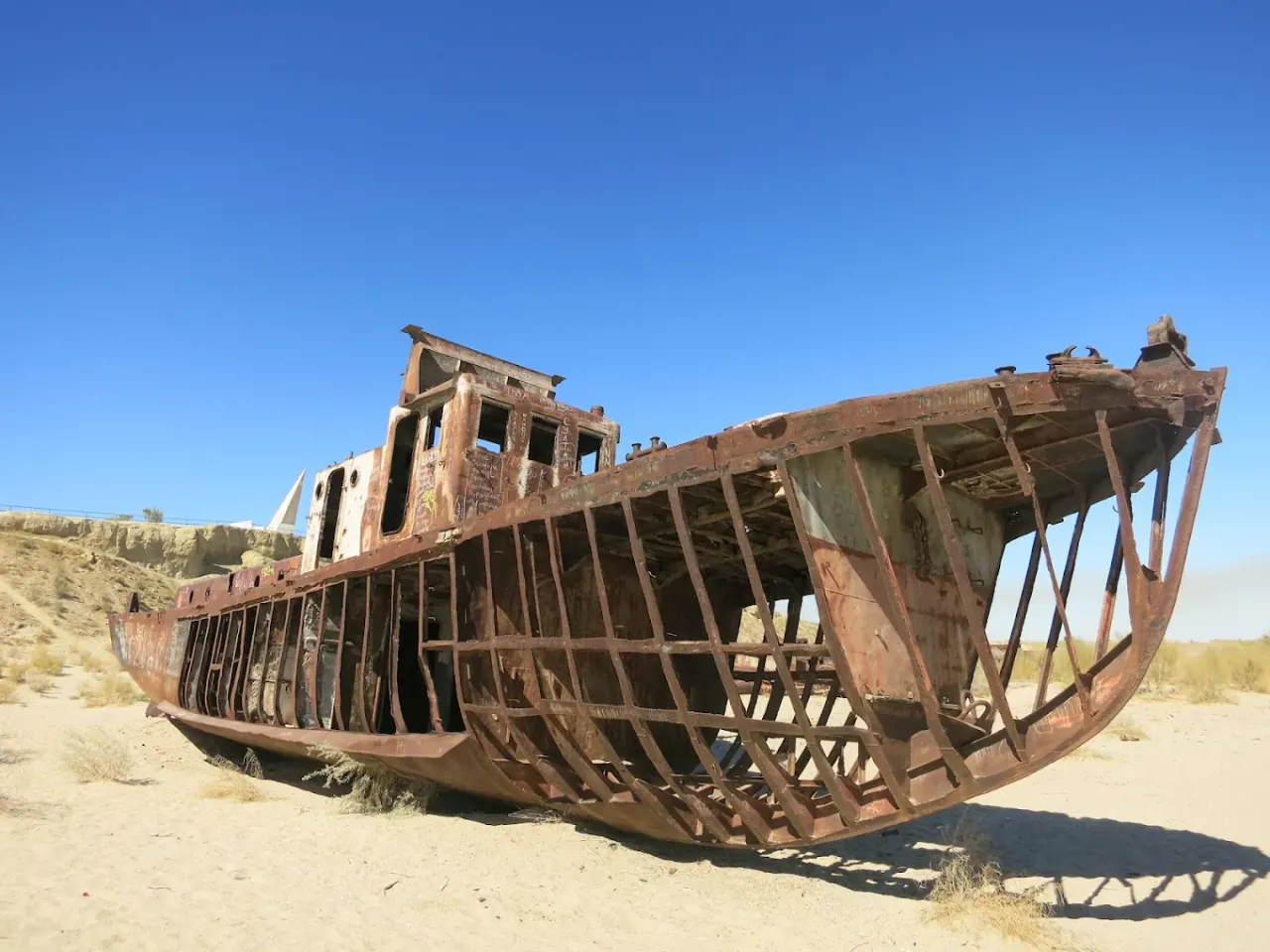
Bukhara features in all our multi-day journeys: Classic Uzbekistan Tour (two nights, including suburban Bukhara), the Gastronomic Tour and the 11-day journey to the Aral Sea, which continues across the Kyzylkum Desert to Khiva.