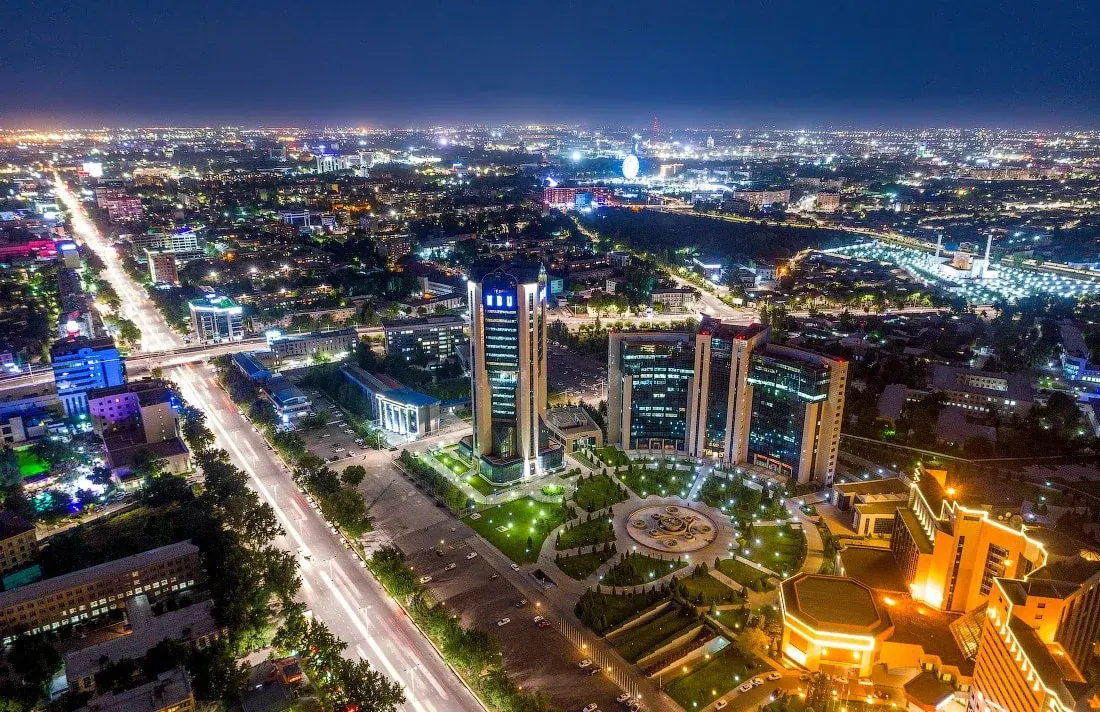
Great Samarkand is one of the ancient cities of the world: it is about 2,750 years old. Samarkand lies in the picturesque valley of the Zarafshan River, surrounded by the Pamir-Alay mountains. Amir Temur made Samarkand the capital of his great empire, and its blue domes have become the image of the Silk Road.
From Maracanda to Temur’s capital
The ancient city stood on the hill of Afrasiyab, on the northern edge of today’s Samarkand. As Maracanda, the capital of Sogdiana, it was captured by Alexander the Great in 329 BCE. Over the following centuries, Sogdian merchants made it one of the great trading cities of Central Asia; the seventh-century wall paintings found at Afrasiyab, now in the site museum, show ambassadors from distant lands.
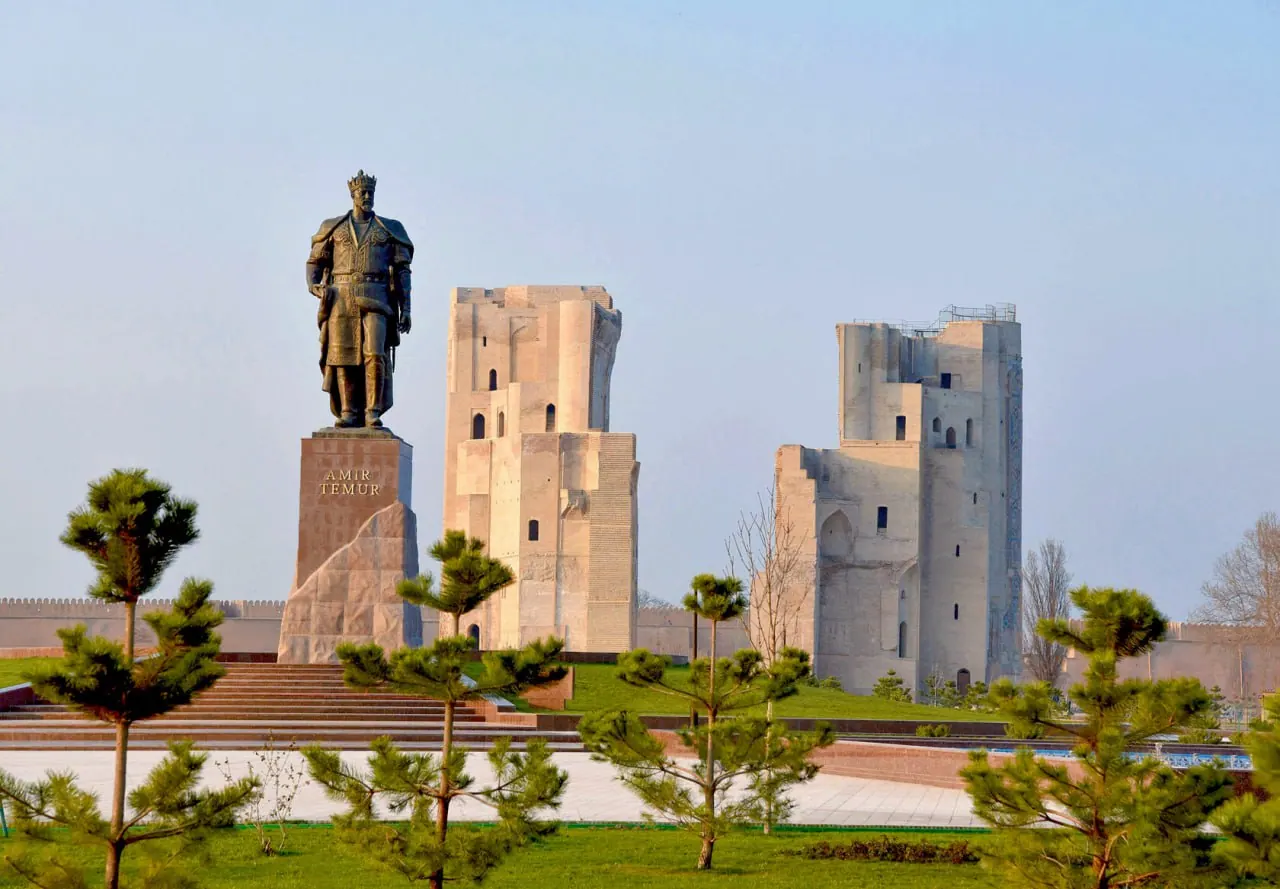
The city was devastated by the Mongols in 1220 and rebuilt on its present site. From 1370, Amir Temur made it the capital of his empire and filled it with monumental buildings raised by craftsmen from across his conquests. His grandson Ulugh Beg turned it into a centre of science. UNESCO inscribed the city as Samarkand – Crossroad of Cultures in 2001.
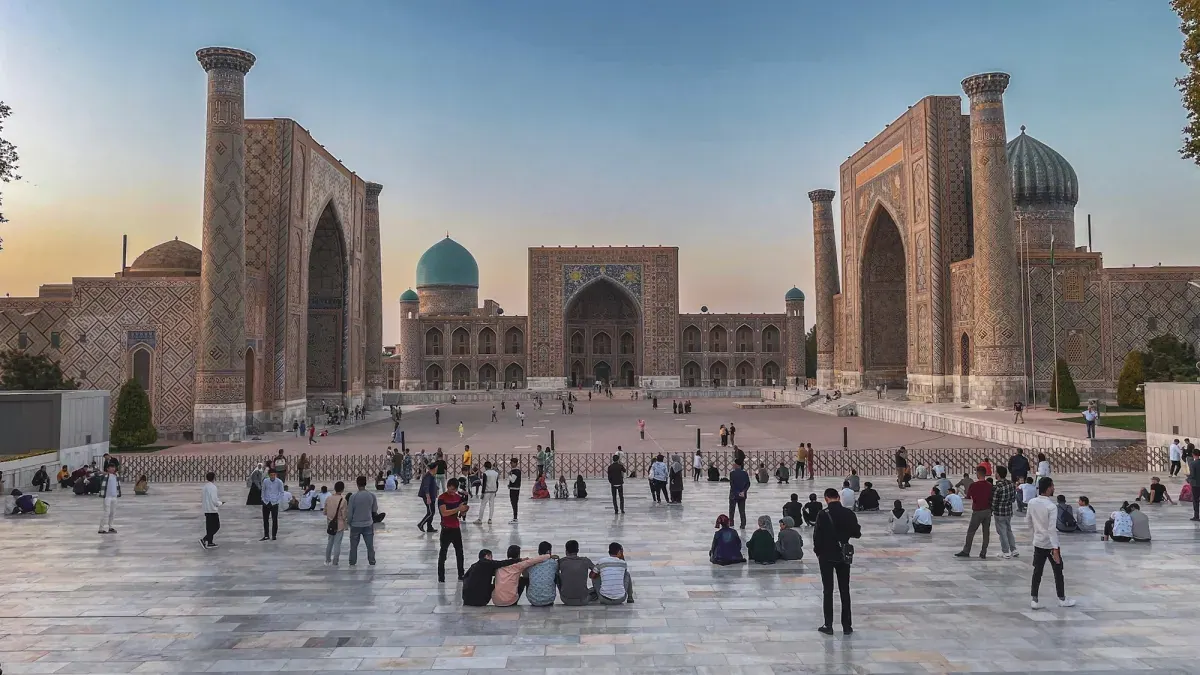
Registan Square
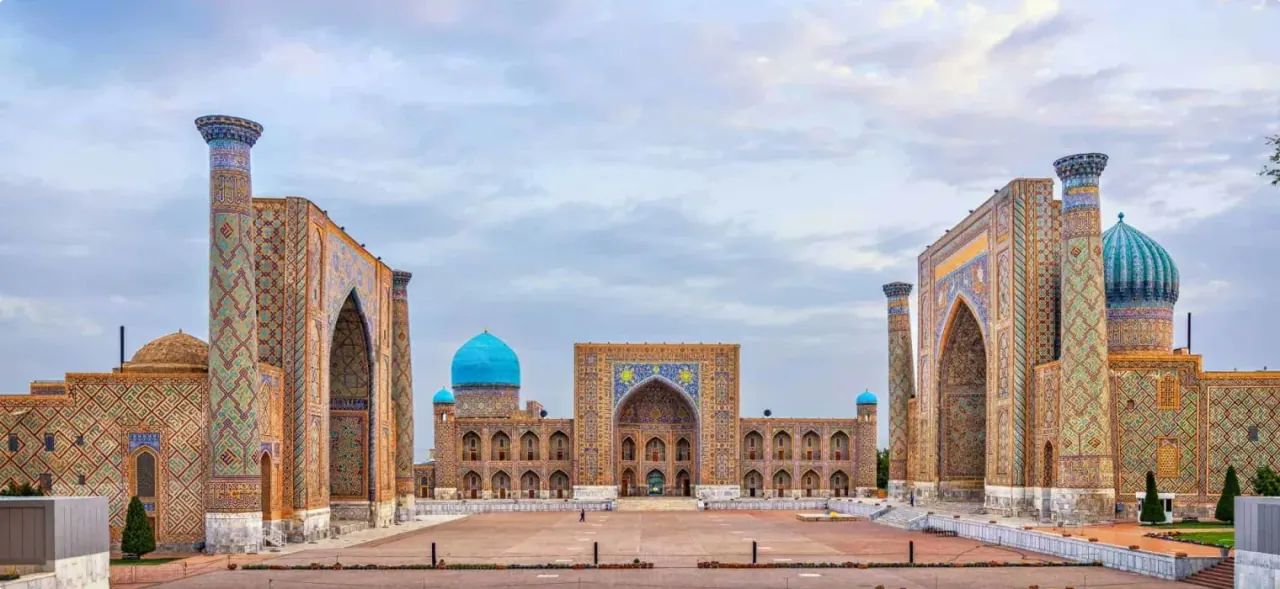
The Registan (“sandy place”) was the commercial and ceremonial heart of the medieval city. Three madrasas frame it on three sides:
- The Ulugh Beg Madrasa (1417–1420), built by the astronomer-ruler, was one of the leading universities of its time.
- The Sher-Dor Madrasa (1619–1636) mirrors it across the square; its portal shows tigers (or lions) chasing deer beneath a sun with a human face, a rare figurative image.
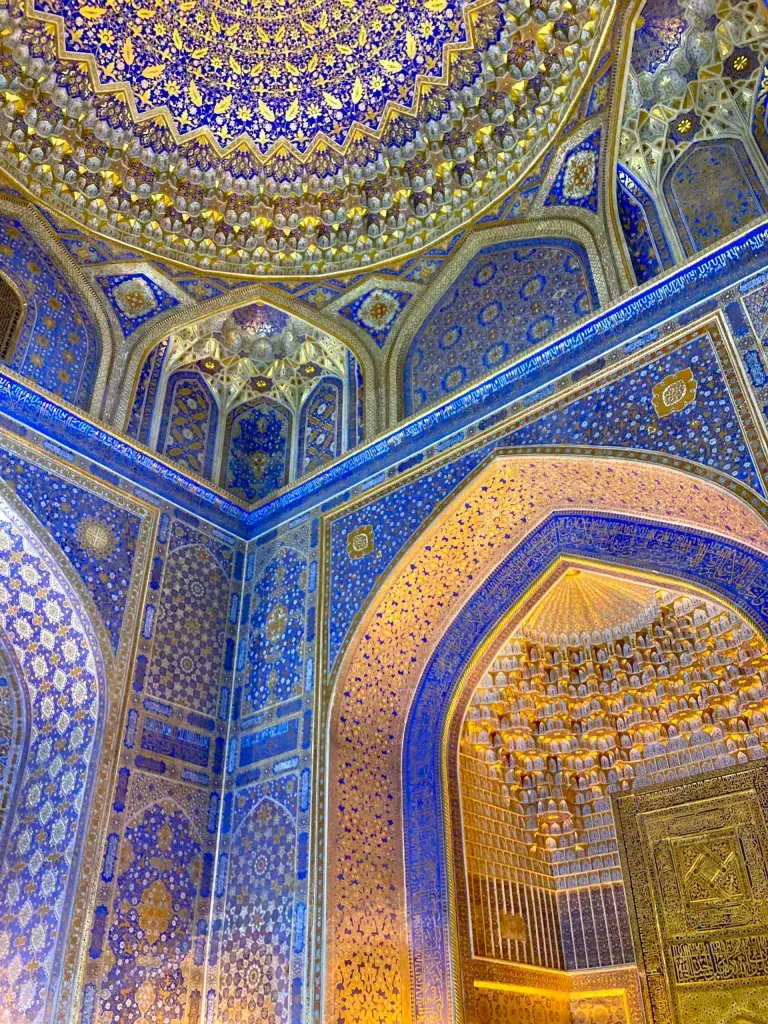
- The Tilya-Kori Madrasa (1647–1660) served as both college and Friday mosque, and its prayer hall glitters with gilded decoration (“tilya-kori” means “gilded”).
Visit early in the morning or at sunset, when the tilework glows.
Gur-e-Amir
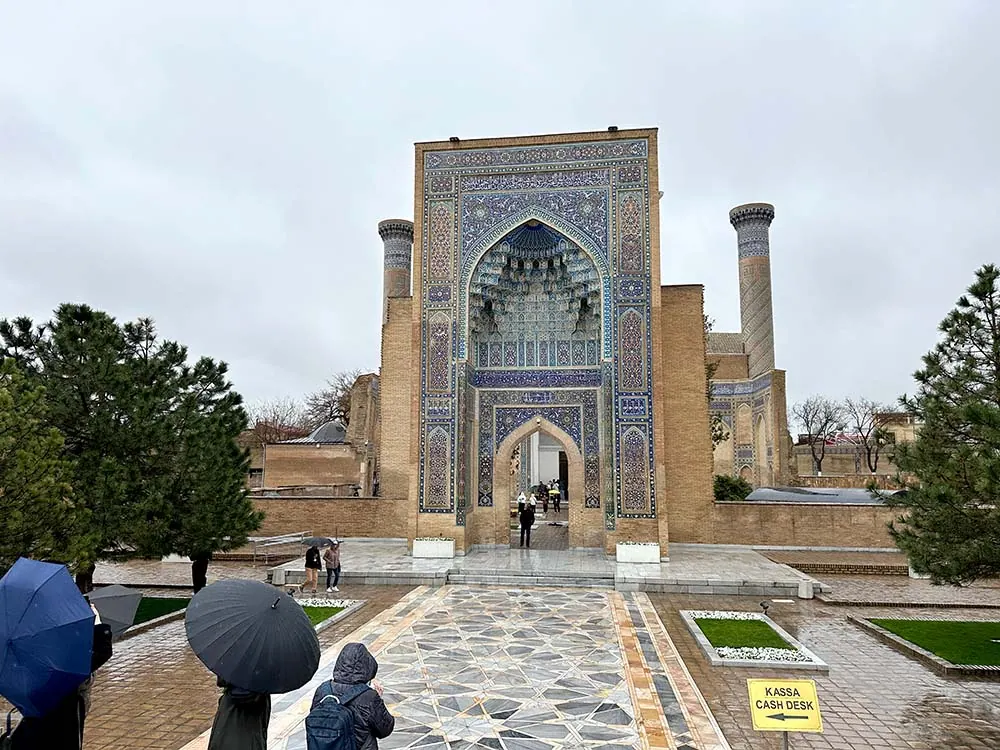
The Gur-e-Amir (“tomb of the ruler”) is the mausoleum of Amir Temur, who died in 1405, and of several Timurid princes, including Ulugh Beg. Its fluted turquoise dome and richly gilded interior make it one of the masterpieces of Timurid architecture.
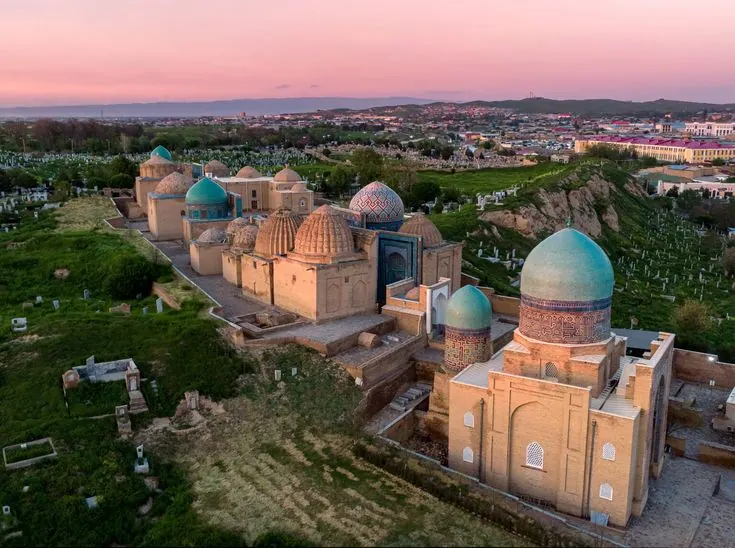
Shah-i-Zinda
On the slope of the Afrasiyab hill, Shah-i-Zinda (“the living king”) is a narrow street of mausoleums built mainly in the fourteenth and fifteenth centuries for members of the Timurid family and nobility. It grew around a shrine traditionally associated with Kusam ibn Abbas, a cousin of the Prophet Muhammad. The tile mosaics, carved majolica and glazed terracotta here are among the finest anywhere.
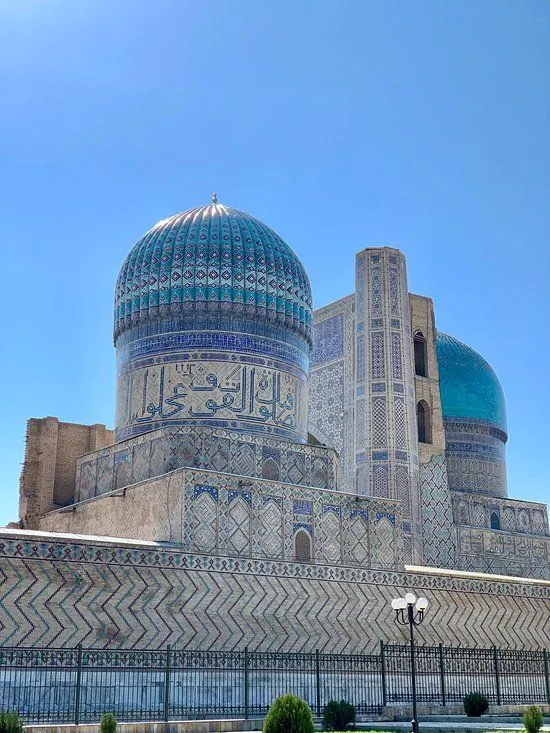
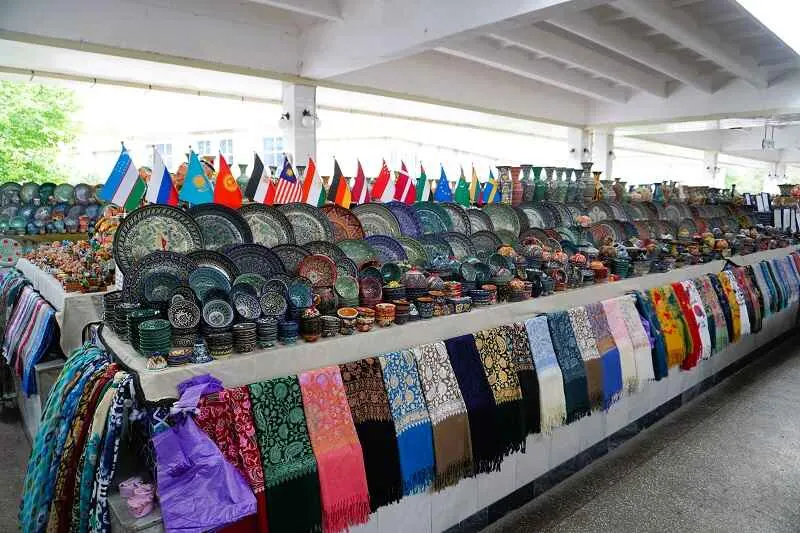
Bibi-Khanym Mosque and Siab Bazaar
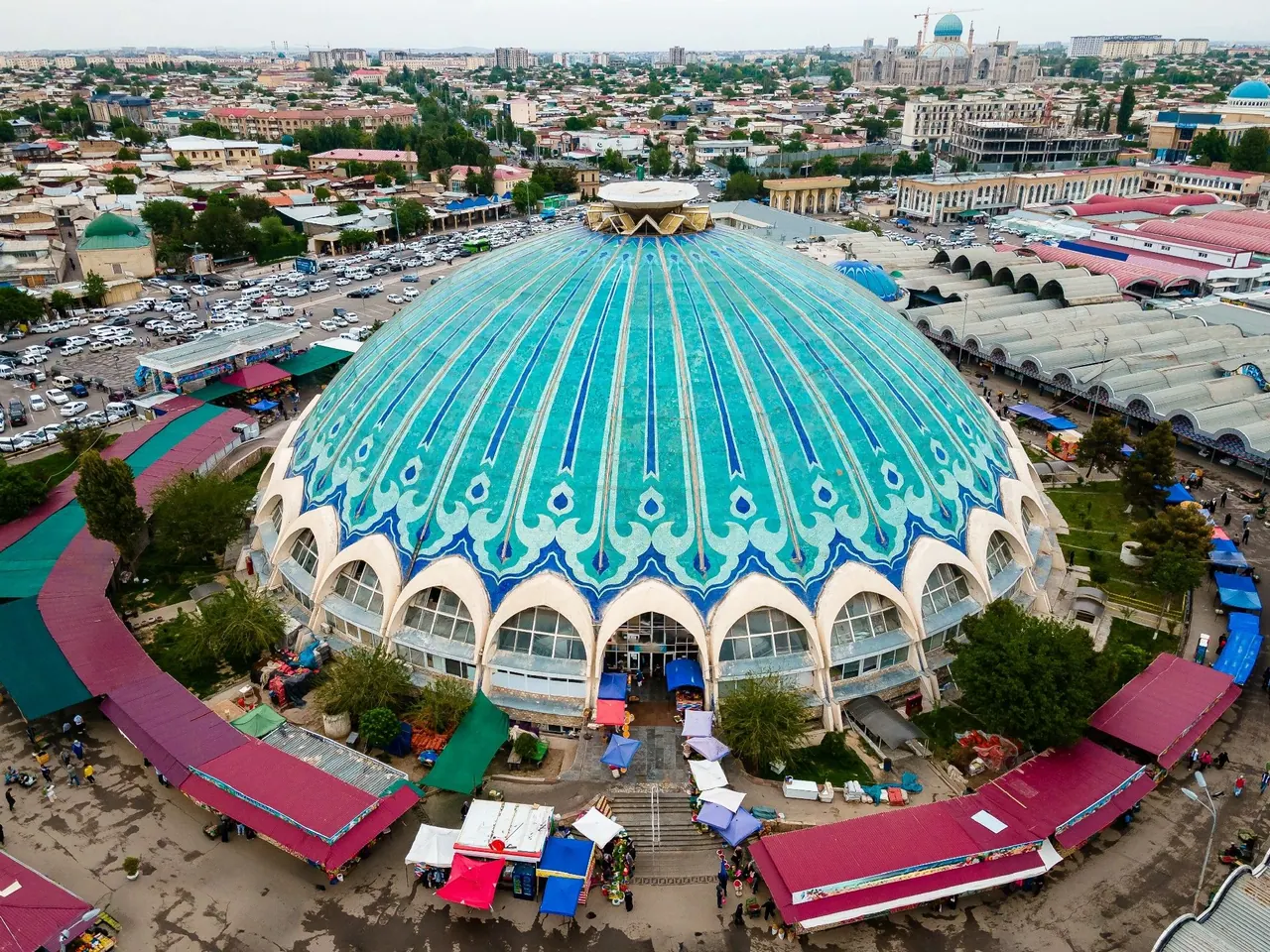
Built after Temur’s campaign in India in 1399, the Bibi-Khanym Mosque was meant to be one of the largest mosques in the world. Its vast dome and portal suffered from hurried construction and earthquakes and were partly rebuilt in the twentieth century; UNESCO continues to monitor its conservation. Next door, the lively Siab Bazaar sells Samarkand’s famous bread, halva, dried fruit and nuts.
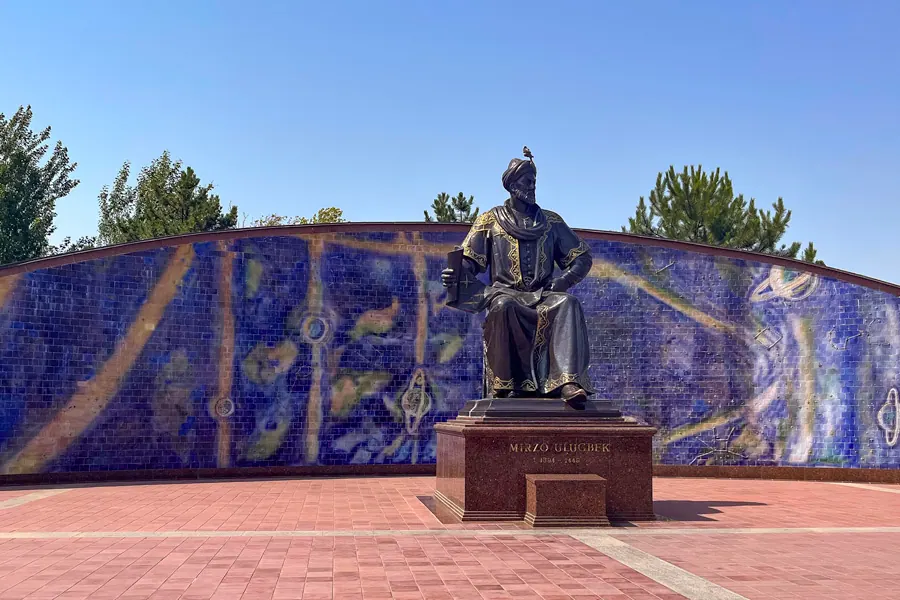
The Observatory of Ulugh Beg
In the 1420s, Ulugh Beg built a three-storey observatory on a hill outside the city. Its main instrument, a giant meridian arc set into a trench, allowed observations of remarkable precision, and his star catalogue was used for centuries. The observatory was destroyed after his death in 1449; the surviving underground section of the instrument was rediscovered in 1908. A small museum tells the story.
Crafts of Samarkand
Samarkand was one of the first places in the Islamic world to make paper, and handmade mulberry-bark paper is produced again today at Konigil, just outside the city. The city is also known for silk carpets, embroidery and its dense, glossy Samarkand non bread.
Around Samarkand
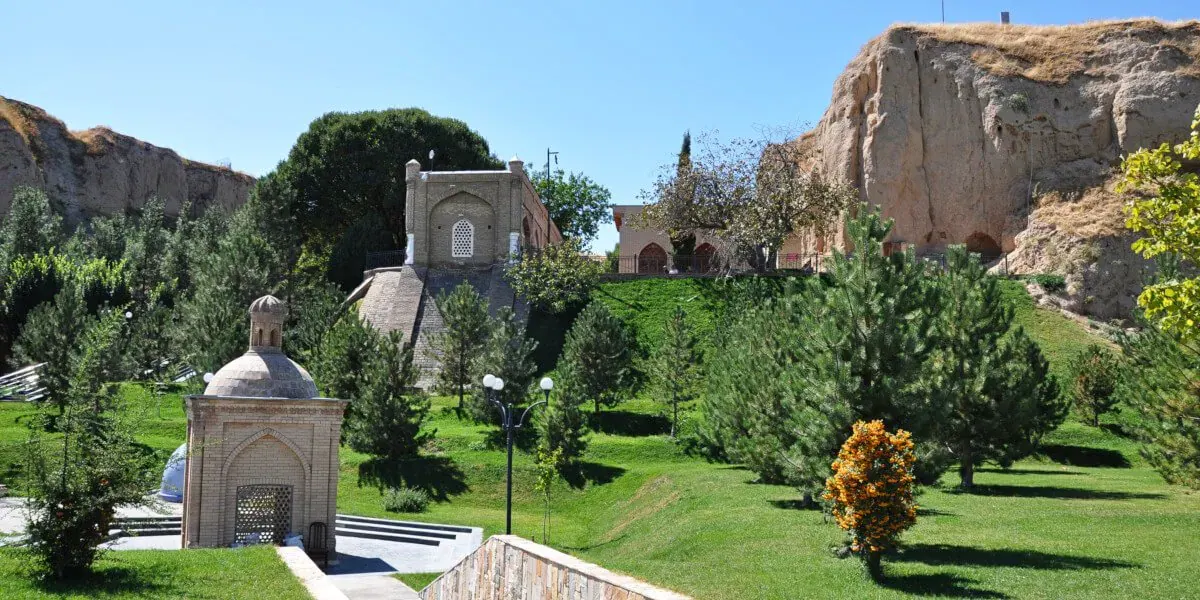
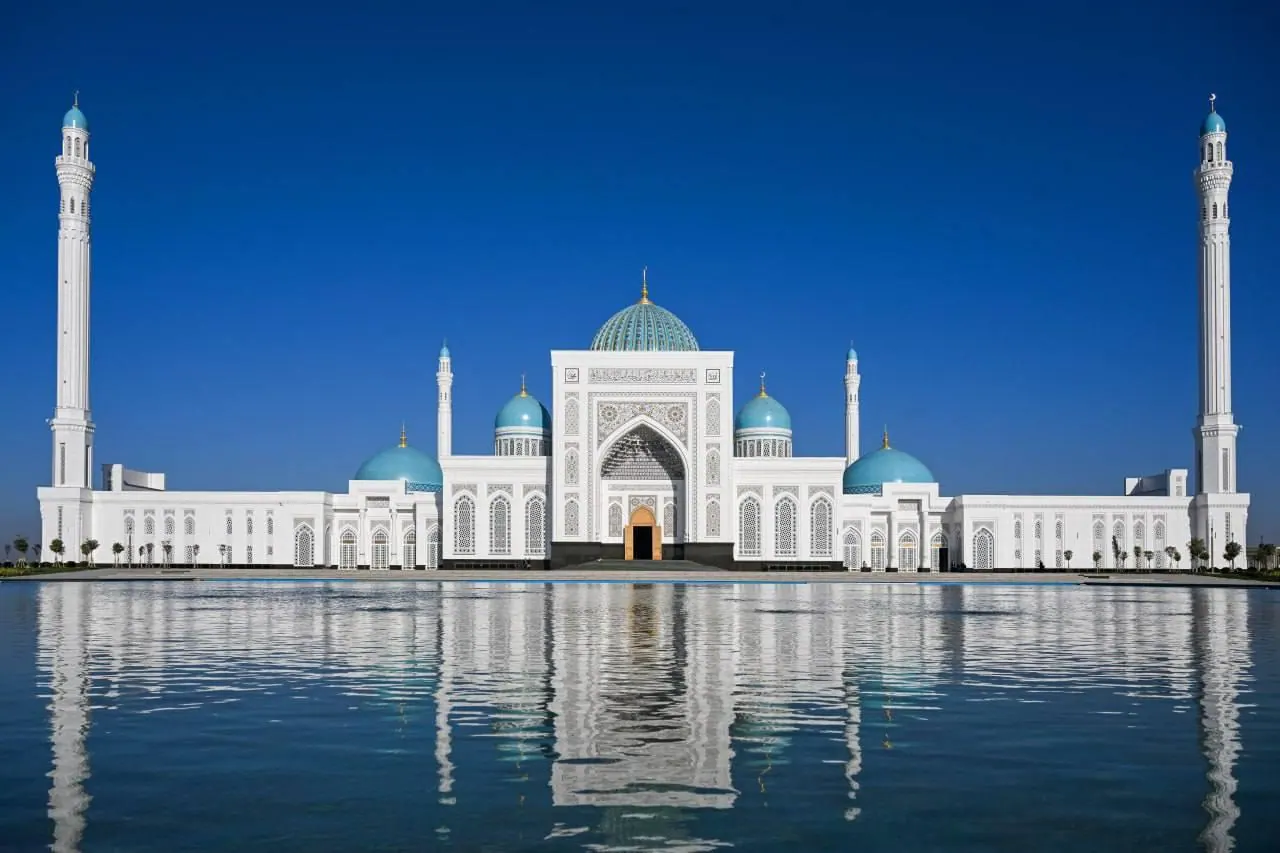
The Imam al-Bukhari Memorial Complex outside the city honours the great hadith scholar and is a major pilgrimage site. South of Samarkand, the road crosses the Takhta-Karacha pass to Shakhrisabz, Temur’s birthplace.
Visit Samarkand with Turenta Travel
Samarkand is included in our Classic Uzbekistan Tour, with a plov master class in a national home, the Gastronomic Tour and the 11-day journey to the Aral Sea. Our Samarkand City Tour covers the main sights, including the Imam al-Bukhari complex.