The territory of modern Uzbekistan has been inhabited for tens of thousands of years, and its river oases have supported towns and irrigated farmland for well over two millennia. Its history is a story of great empires meeting at a crossroads, and of cities that repeatedly rose again after conquest.
Ancient civilisations of the oases
In the first millennium BCE, three settled regions emerged along the rivers that cross the desert. Khorezm (Chorasmia) lay on the lower Amu Darya, near the Aral Sea. Sogdiana occupied the valley of the Zarafshan, with its capital at Maracanda, the city now called Samarkand. To the south, Bactria stretched along the upper Amu Darya. Their peoples spoke Eastern Iranian languages and built fortified towns and sophisticated irrigation networks. Many of the “desert castles” of ancient Khorezm survive as ruins in Karakalpakstan today.
In the sixth century BCE these lands became provinces (satrapies) of the Persian Achaemenid Empire, and they appear in Persian royal inscriptions as sources of tribute and soldiers.
Alexander the Great and the Hellenistic world
In 329 BCE, Alexander the Great entered Sogdiana and captured Maracanda. The campaign that followed was one of the hardest of his career, as local leaders resisted for two years. Alexander eventually married Roxana, the daughter of a local nobleman, to secure the region. After his death, Greek rule continued in the Greco-Bactrian kingdom, and Hellenistic influence can be traced in the art and coinage of the region.
From the first century CE, the Kushan Empire ruled the south of present-day Uzbekistan. Buddhist monasteries flourished around Termez on the Amu Darya, and trade between China, India and the Roman world intensified.
The Sogdians and the Silk Road
Between roughly the fifth and eighth centuries CE, Sogdian merchants built trading networks that reached deep into China. Sogdian became a common language of commerce along the Silk Road, and the wall paintings of Afrasiyab, the ancient site of Samarkand, show the cosmopolitan world of this time. Read more in our guide to the Silk Road.
The arrival of Islam and the Samanids
Arab armies conquered the region in the early eighth century, and over the following centuries Islam became the dominant faith. The lands between the Amu Darya and Syr Darya became known in Arabic as Mawarannahr, “what lies beyond the river”.
Under the Samanid dynasty (819–999), with Bukhara as its capital, the region became one of the brightest centres of the Islamic world. Persian literature, science and Islamic scholarship flourished. The Samanid Mausoleum in Bukhara, a masterpiece of brick architecture, survives from this period. The great scholars of this age are described in our guide to religion and scholarship.
The Turkic Karakhanids followed in the tenth to twelfth centuries; Bukhara’s Kalyan Minaret (1127) dates from their rule. In Khorezm, the Khwarazmshahs built a powerful state in the twelfth and early thirteenth centuries.
The Mongol conquest
In 1219–1221, the armies of Genghis Khan swept through Central Asia. Bukhara, Samarkand and Urgench were captured and badly damaged, and much of the irrigation system was destroyed. The region then became part of the Chagatai Khanate, ruled by Genghis Khan’s descendants.
Amir Temur and the Timurid renaissance
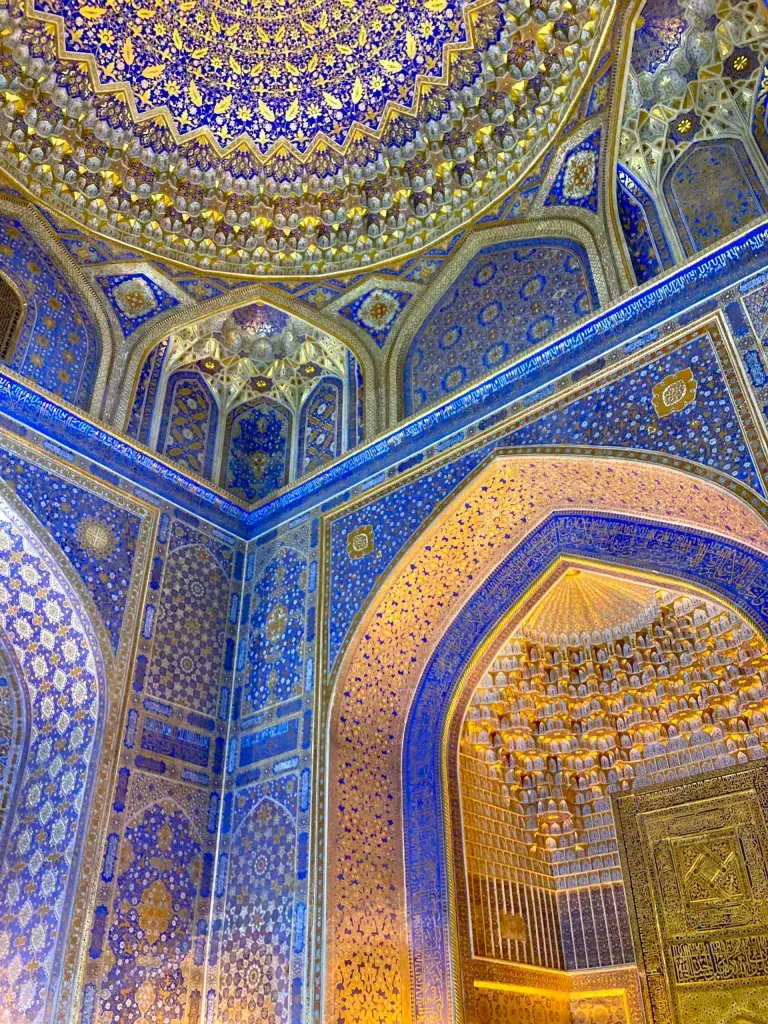
In the second half of the fourteenth century, Amir Temur (1336–1405), born near Kesh (present-day Shakhrisabz), rose to power. From 1370 he led campaigns that created an empire stretching from Anatolia to India. He chose Samarkand as his capital and brought architects, craftsmen and scholars from conquered lands to build it. Gur-e-Amir, where he is buried, and the vast Bibi-Khanym Mosque date from his time, as does the Ak-Saray palace in his home town of Shakhrisabz.
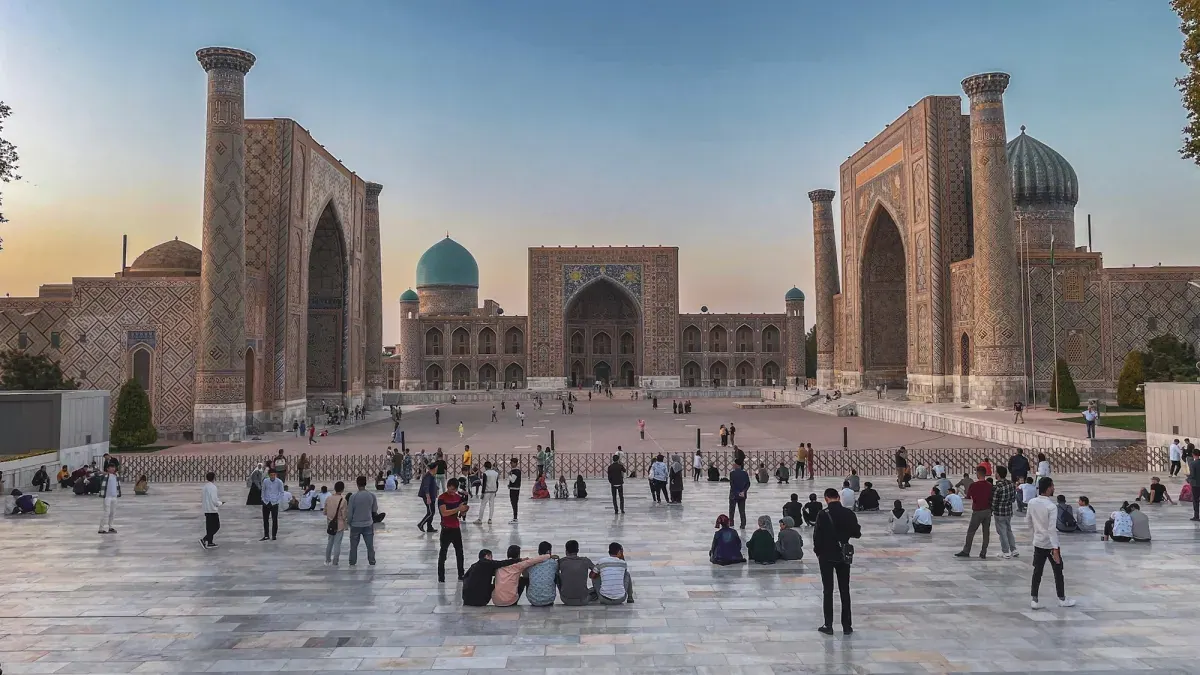
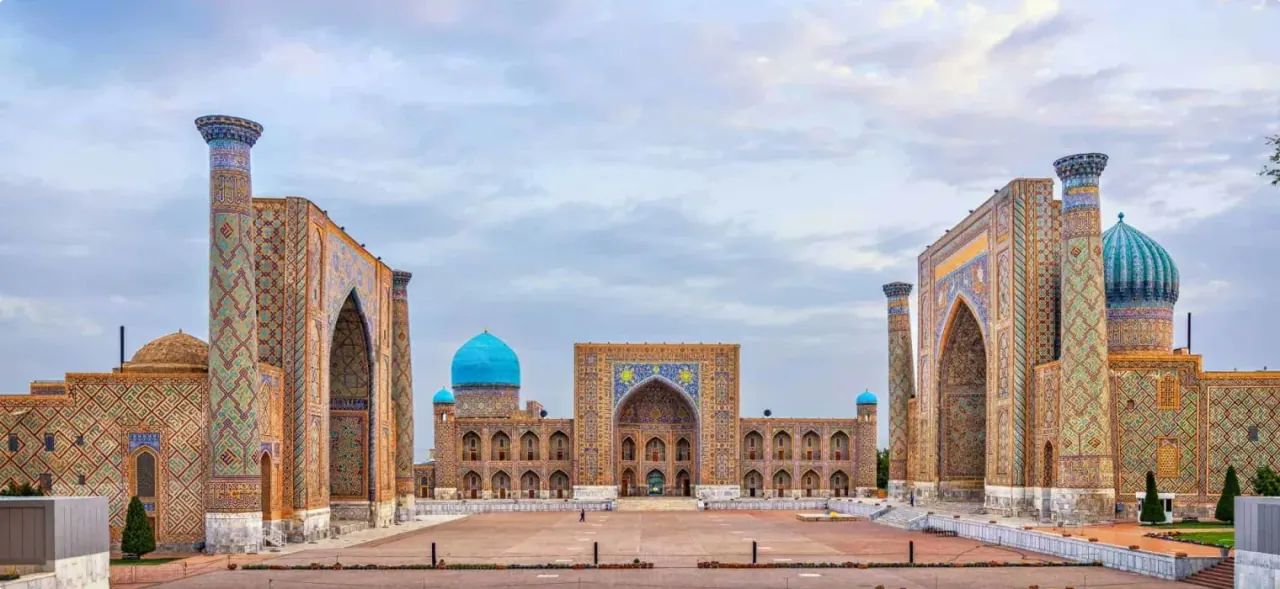
His grandson Ulugh Beg (1394–1449) governed Samarkand from 1409. A ruler and astronomer, he built a madrasa on Registan Square and, in the 1420s, an observatory whose giant meridian instrument allowed remarkably precise observations. His astronomical tables, the Zij-i Sultani, were studied for centuries. Under the Timurids, Samarkand and Herat became centres of art, poetry and science; this period is often called the Timurid renaissance.
The Uzbek khanates
At the beginning of the sixteenth century, the Shaybanids, a dynasty that led nomadic Uzbek tribes from the north, took Transoxiana from the Timurids. Over the following centuries the region divided into three states: the Khanate of Bukhara (later the Emirate of Bukhara), the Khanate of Khiva in Khorezm and, from the eighteenth century, the Khanate of Kokand in the Fergana Valley. Many of the madrasas, palaces and trading domes visitors see in Bukhara and Khiva today date from this era.
The Russian Empire
In the second half of the nineteenth century, the Russian Empire expanded into Central Asia. Russian forces took Tashkent in 1865, and Tashkent became the administrative centre of Russian Turkestan. Bukhara became a Russian protectorate in 1868 and Khiva in 1873, while Kokand was annexed in 1876. Railways, cotton cultivation and a new European-style city quarter in Tashkent transformed the region.
The Soviet period
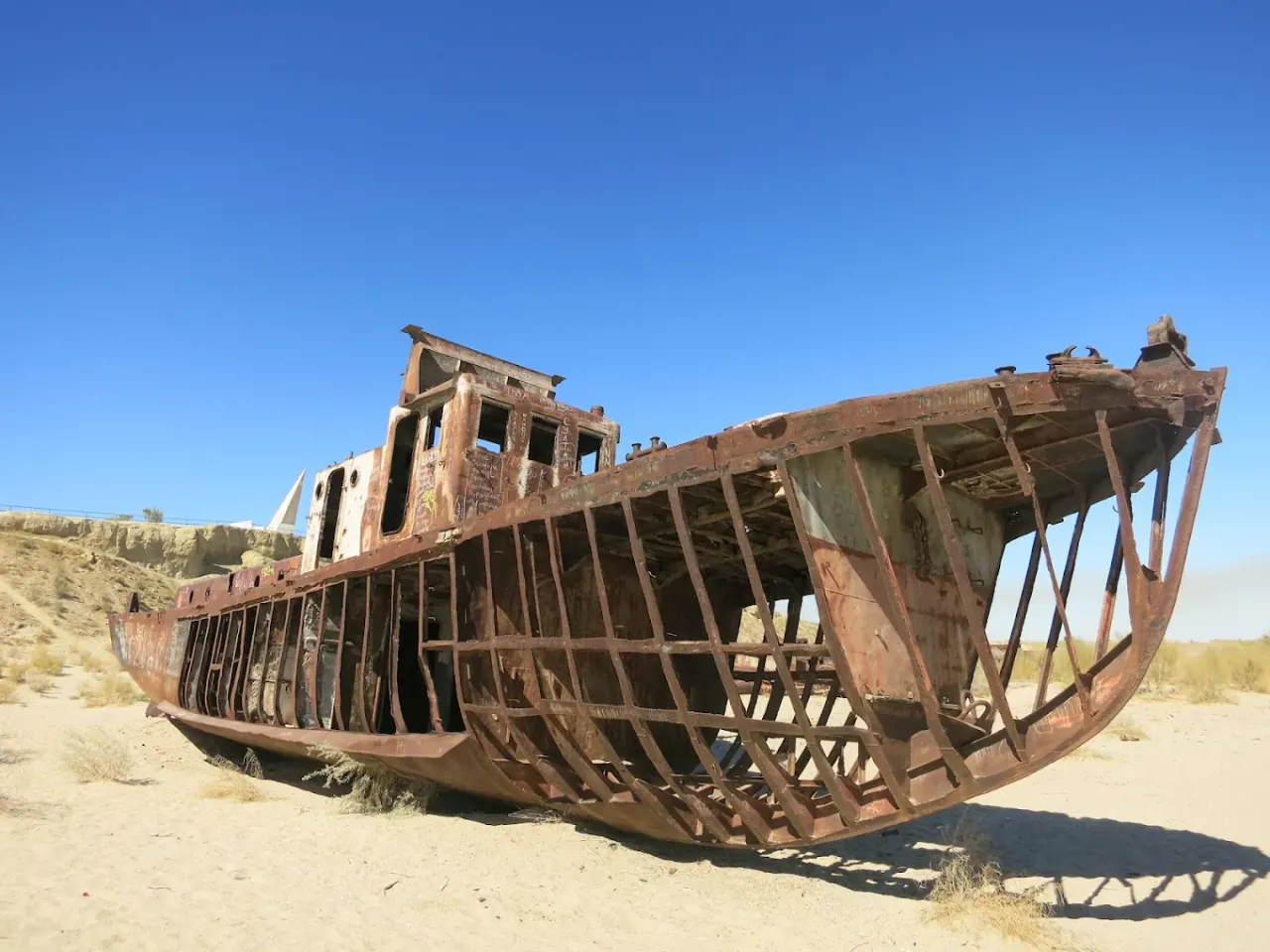
After the 1917 revolution, the khanates were replaced by short-lived people’s republics. In 1924 the Soviet authorities drew new national borders and created the Uzbek Soviet Socialist Republic. Its capital was moved from Samarkand to Tashkent in 1930. The Soviet decades brought industrialisation, mass literacy and the expansion of cotton farming, but also political repression and the large-scale diversion of rivers for irrigation that led to the Aral Sea disaster.
On 26 April 1966, a powerful earthquake struck Tashkent. Much of the centre was rebuilt as a model Soviet city, and in 2026 a group of its modernist buildings was inscribed on the UNESCO World Heritage List.
Independence and modern Uzbekistan
Uzbekistan declared independence in 1991, as the Soviet Union dissolved, and the anniversary is celebrated on 1 September. The constitution was adopted on 8 December 1992. Since independence, the country has restored and promoted its historic monuments, reconnected with its Silk Road heritage and, especially in recent years, opened up to international tourism.
Today Uzbekistan is home to around 37 million people. Its cities preserve layer upon layer of this history, from Sogdian ruins and Timurid domes to the khans’ palaces and the Soviet-era metro.
Frequently asked questions
Who was Amir Temur?
Amir Temur (1336–1405), known in Europe as Tamerlane, was a Turco-Mongol ruler born near present-day Shakhrisabz. From 1370 he built an empire across Central and Western Asia and made Samarkand its capital. Many of Samarkand's greatest monuments date from his reign and that of his descendants, the Timurids.
When did Uzbekistan become independent?
Uzbekistan declared independence from the Soviet Union in 1991. Independence Day is celebrated every year on 1 September and is the country's main national holiday.
What was Sogdiana?
Sogdiana was an ancient Iranian civilisation centred on the Zarafshan valley, with its capital at Maracanda, today's Samarkand. Sogdian merchants became some of the most important traders on the Silk Road between roughly the 5th and 8th centuries CE.