History of Uzbekistan
From Sogdian merchants and Alexander the Great to Amir Temur, the khanates and independence in 1991: three thousand years of history in the heart of Central Asia.
Uzbekistan guide
Where Uzbekistan is, what makes it special and how to plan a journey through the heart of Central Asia: an introduction to the country, its cities and its heritage.
Uzbekistan sits at the centre of Central Asia, between the Kyzylkum Desert and the foothills of the Tian Shan. For more than two thousand years, the oases along its rivers were stopping places for caravans, scholars and conquerors. Some of the most celebrated cities of the Silk Road grew up here, and their monuments still define the country today.
Uzbekistan stretches roughly 1,400 kilometres from the Aral Sea basin in the west to the fertile Fergana Valley in the east. It borders Kazakhstan, Kyrgyzstan, Tajikistan, Afghanistan and Turkmenistan. Because all of its neighbours are also landlocked, it is one of only two doubly landlocked countries in the world; the other is Liechtenstein.
Much of the west of the country is desert and steppe, crossed by the Amu Darya, one of Central Asia’s two great rivers. In the east, the land rises into the western ranges of the Tian Shan and the Pamir-Alay, where the capital, Tashkent, and the mountain resorts of the Tashkent Region are found. The autonomous Republic of Karakalpakstan covers the north-west, around the former shores of the Aral Sea.
Uzbekistan’s location placed it on the overland routes that linked China, India, Persia and the Mediterranean world. Ancient Sogdiana, with its capital at Maracanda (Samarkand), was home to some of the most successful merchants of the Silk Road. Later the region became one of the great centres of Islamic learning. In the late fourteenth century, Amir Temur (Tamerlane) made Samarkand the capital of an empire that stretched across much of western and central Asia.
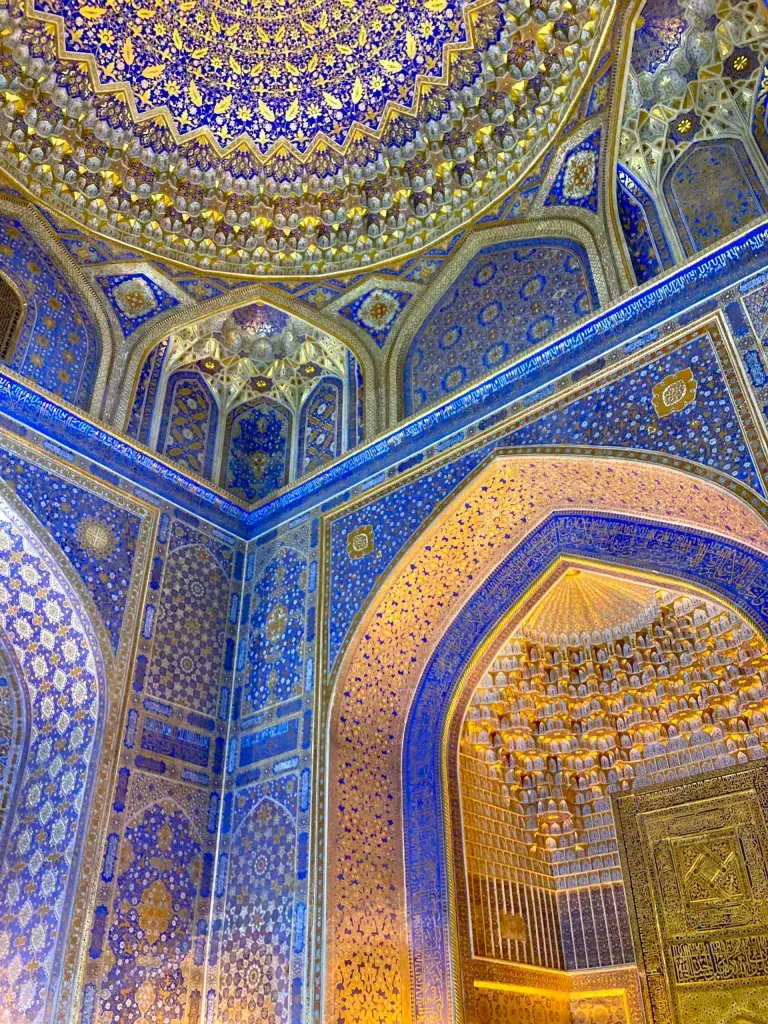
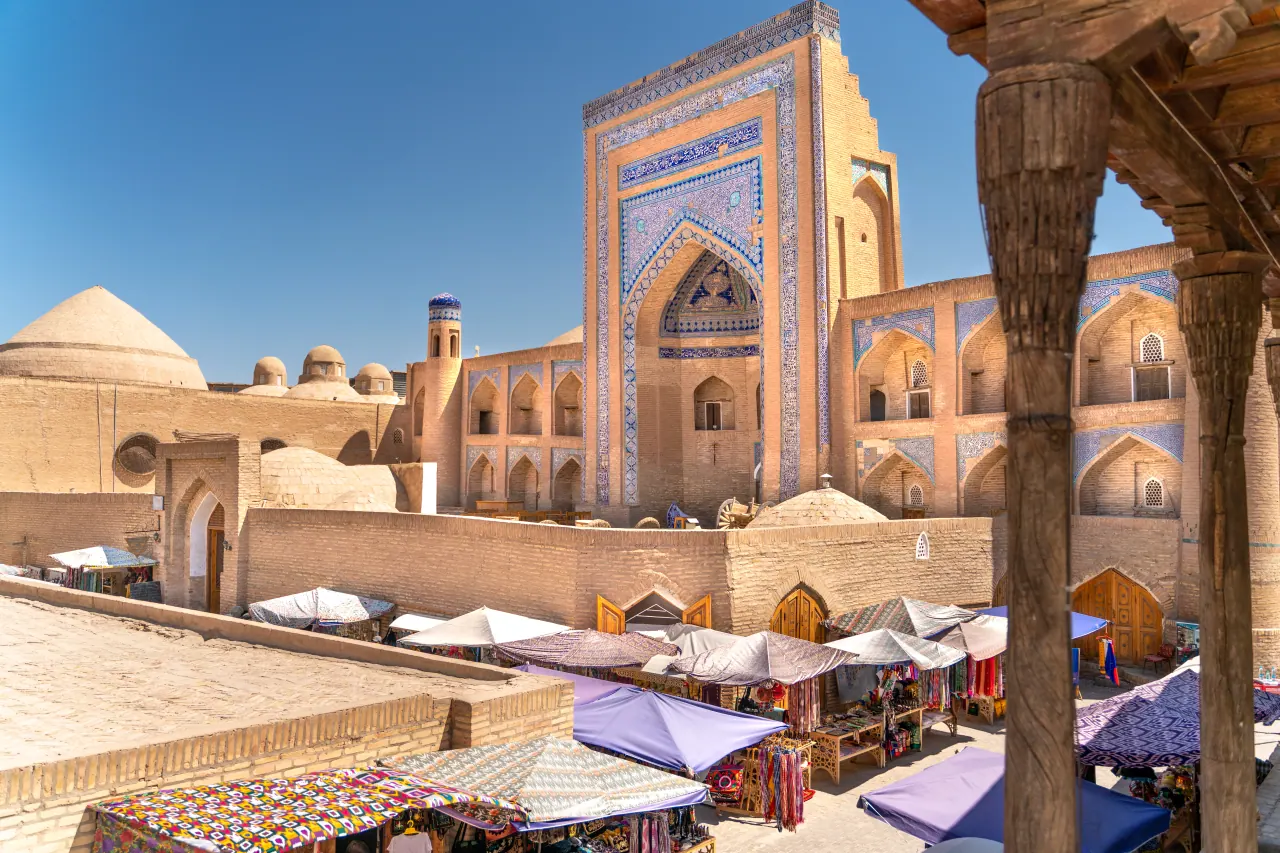
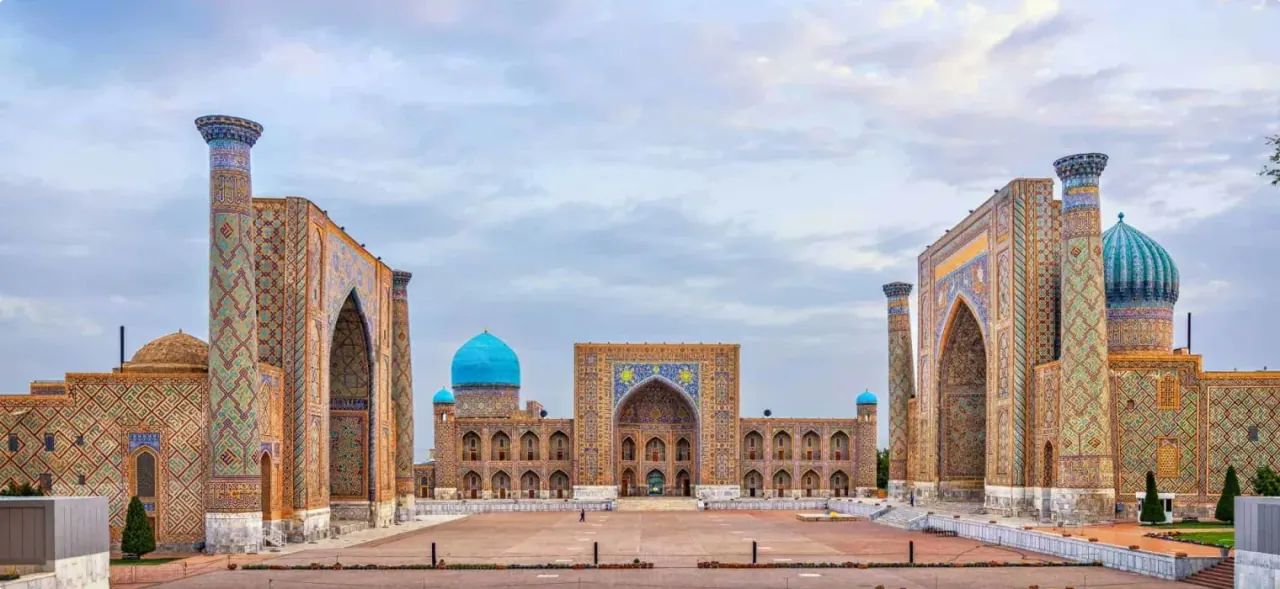
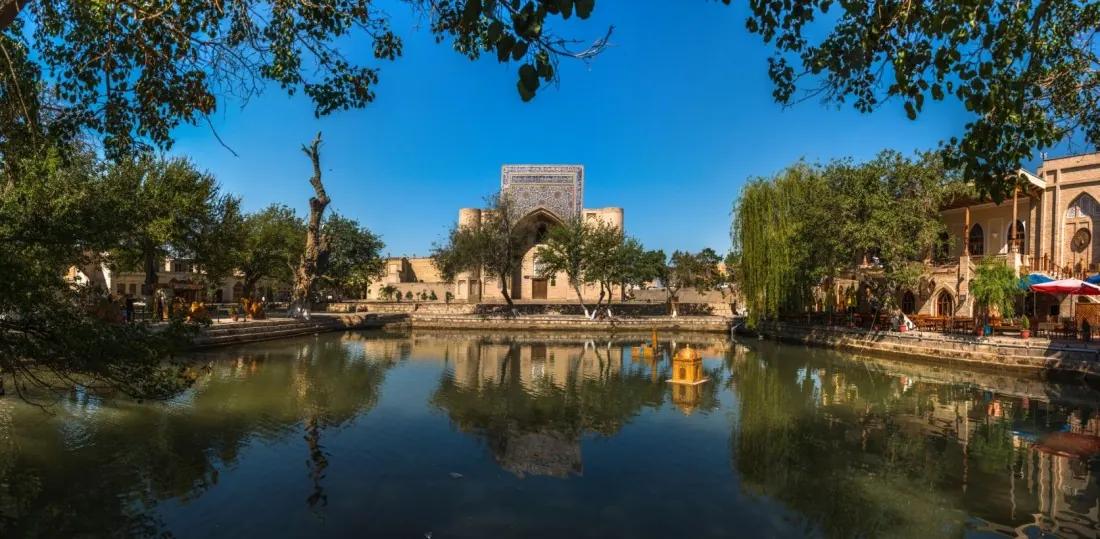
The legacy of these centuries is visible everywhere: in the turquoise domes of Samarkand, the brick minarets of Bukhara, the walled inner town of Khiva and the trading domes where merchants once exchanged silk, spices and paper. Read more in our guides to the history of Uzbekistan and the Silk Road.
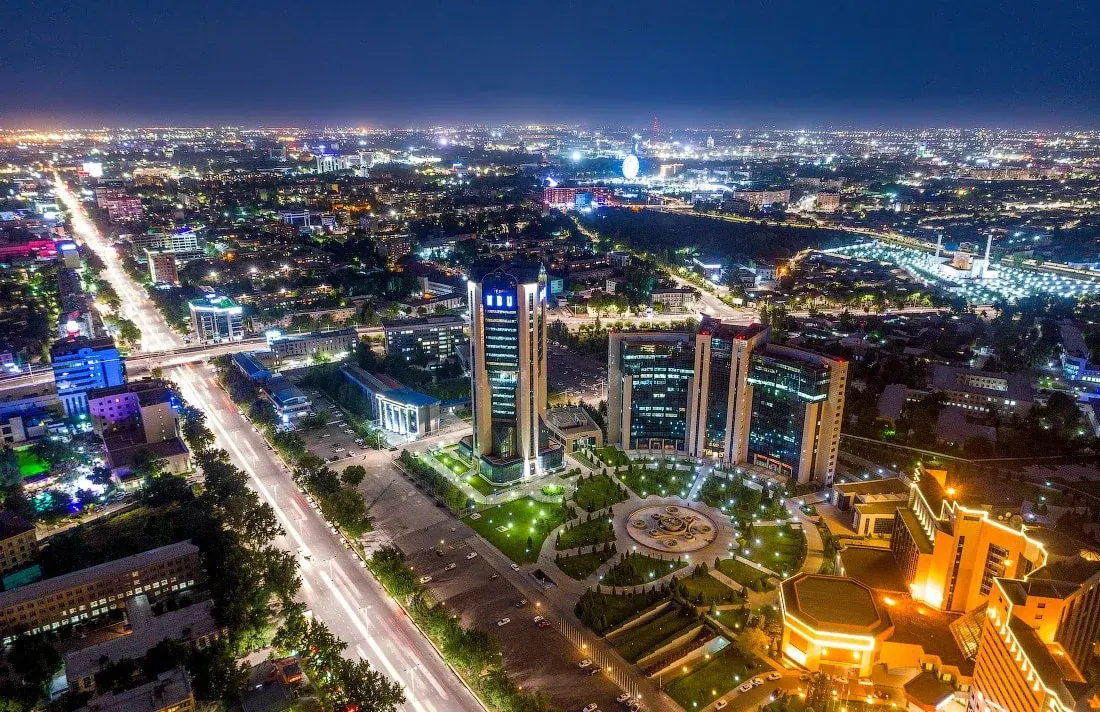
Uzbekistan became independent on 1 September 1991, after the dissolution of the Soviet Union. It is the most populous country in Central Asia, with around 37 million people, and a young, fast-changing society. Tashkent is a modern capital with wide avenues, parks and an ornate metro. Elsewhere, life in the old quarters still revolves around the bazaar, the teahouse (choyxona) and the family courtyard.
The state language is Uzbek, a Turkic language officially written in the Latin alphabet, although Cyrillic is still widely seen. Russian is widely understood, and Karakalpak is the official language of Karakalpakstan alongside Uzbek. The population is predominantly Muslim, in a secular state where religious traditions sit alongside a strong sense of national culture.
Uzbekistan’s historic cities and landscapes are recognised by UNESCO. As of 2026 the country has eight properties on the World Heritage List:
| Property | Type | Inscribed |
|---|---|---|
| Itchan Kala (Khiva) | Cultural | 1990 |
| Historic Centre of Bukhara | Cultural | 1993 |
| Historic Centre of Shakhrisyabz | Cultural | 2000 |
| Samarkand – Crossroad of Cultures | Cultural | 2001 |
| Western Tien-Shan (shared with Kazakhstan and Kyrgyzstan) | Natural | 2016 |
| Silk Roads: Zarafshan-Karakum Corridor (shared with Tajikistan and Turkmenistan) | Cultural | 2023 |
| Cold Winter Deserts of Turan (shared with Kazakhstan and Turkmenistan) | Natural | 2023 |
| Tashkent Modernist Architecture: Modernity and Tradition in Central Asia | Cultural | 2026 |
The Historic Centre of Shakhrisyabz has been on UNESCO’s List of World Heritage in Danger since 2016. UNESCO also lists many elements of Uzbekistan’s living culture as Intangible Cultural Heritage, among them Shashmaqom music, the culture and tradition of palov (plov), the Khorezm dance Lazgi and the art of Askiya wit.
Most journeys begin in Tashkent and continue west along the old caravan route: to Samarkand, Bukhara and Khiva, with the option of travelling on to Nukus and Karakalpakstan and the Aral Sea. Around the capital, the Tashkent Region offers mountains, vineyards and the remarkable Great Solar Furnace at Parkent.
Browse our tours or contact Turenta Travel to start planning.
Uzbekistan guide
History, culture, food, nature and practical advice: what to know before you travel to Uzbekistan.
From Sogdian merchants and Alexander the Great to Amir Temur, the khanates and independence in 1991: three thousand years of history in the heart of Central Asia.
How the caravan routes between China and the Mediterranean shaped Samarkand, Bukhara and Khiva, and what remains of that world for travellers today.
Madrasas, mosques, minarets, mausoleums, fortresses and trading domes: how to read the monuments of Uzbekistan, from Samanid brickwork to Timurid tilework.
Hospitality, the mahalla and family life, traditional dress, music and dance, and the crafts of silk, ceramics, carpets and carved wood that make Uzbek culture so distinctive.
Plov, samsa, manti, lagman, shurpa and freshly baked non bread: a guide to Uzbekistan's food, its regional variations, sweets and the culture of green tea.
From Zoroastrian fire temples to the great Islamic scholars of Bukhara, Samarkand and Khorezm: the spiritual and intellectual heritage of Uzbekistan.
Navruz, weddings, the harvest season, national holidays and music festivals: when and how Uzbekistan celebrates, and what travellers can expect.
The Tian Shan and Pamir-Alay mountains, the Kyzylkum Desert, the Amu Darya and Syr Darya, the Aral Sea, reservoirs and nature reserves: Uzbekistan's landscapes explained.
Spring blossom, summer heat, golden autumn and snowy winters: how the seasons affect sightseeing, mountain trips and journeys to the Aral Sea.
Visas, money, language, time zone, plugs, trains, flights, taxis, SIM cards, food, etiquette, photography and safety: everything you need to know before travelling to Uzbekistan.
Where to go
Uzbekistan is widely regarded as a welcoming destination, and the main tourist cities see many international visitors every year. As anywhere, check your own government's current travel advice before you go and take normal precautions with valuables.
It depends on your nationality. Many nationalities can enter visa-free for a limited stay, others can apply online for an electronic visa, and the rules change from time to time. Always check the current requirements with the Ministry of Foreign Affairs of Uzbekistan (gov.uz/en/mfa), the official e-visa portal (e-visa.gov.uz) or your nearest Uzbek embassy before booking.
A first visit to Tashkent, Samarkand and Bukhara fits comfortably into about a week. Adding Khiva and Karakalpakstan, including the Savitsky Museum in Nukus and the former Aral Sea port of Muynak, takes the journey to around ten or eleven days.
Spring (roughly April to early June) and autumn (September to early November) usually bring the most comfortable sightseeing temperatures. Summers on the plains can be very hot and winters cold, although winter is the season for skiing in the mountains near Tashkent. See our guide to the best time to visit.
The Afrosiyob high-speed train links Tashkent, Samarkand and Bukhara and is the most popular way to travel between them. Khiva and Karakalpakstan are usually reached by road or by domestic flight.
Uzbek is the state language and Russian is widely understood, especially in cities. English is increasingly spoken in hotels and by guides in the main tourist centres, but less so elsewhere, so a local guide makes a real difference.
The currency is the Uzbek som (UZS). Cards are accepted in many hotels, restaurants and larger shops in the cities, but cash is still essential in bazaars, small cafés and rural areas. ATMs and exchange offices are common in the main cities.
Uzbekistan is a secular country with a Muslim-majority population. At mosques, mausoleums and pilgrimage sites, dress modestly: shoulders and knees covered, and a headscarf for women where requested. Follow local signs and your guide's advice.
Tell us how you would like to travel and we will help you plan the journey.