Celebrations are central to life in Uzbekistan, from the great spring festival of Navruz to the weddings that fill the calendar in autumn. Travelling during a festival can be memorable, though it also means busier trains and hotels.
Navruz: the spring new year
Navruz (“new day”) marks the spring equinox and the beginning of the new year in the Persian tradition. It has been celebrated in Central Asia for thousands of years and is shared by many countries, which together inscribed it on UNESCO’s Intangible Cultural Heritage list. In Uzbekistan, Navruz is celebrated on 21 March and is a public holiday.
Families clean their homes, visit relatives and prepare special foods. The most famous is sumalak, a sweet, dark paste of sprouted wheat stirred in a huge cauldron through the night, often by women singing together. Other Navruz dishes include halim (a porridge of wheat and meat) and kok samsa, pastries filled with fresh spring greens. Parks and squares host concerts, traditional games and wrestling (kurash).
Weddings
Uzbek weddings (toy) are among the largest family celebrations in the world, often with hundreds of guests. A wedding usually begins with a morning plov (nahor oshi) served to the men of the neighbourhood, followed by ceremonies, music, dancing and a lavish banquet. The deep sound of the karnay trumpet and the beat of the doira drum are a familiar part of wedding processions.
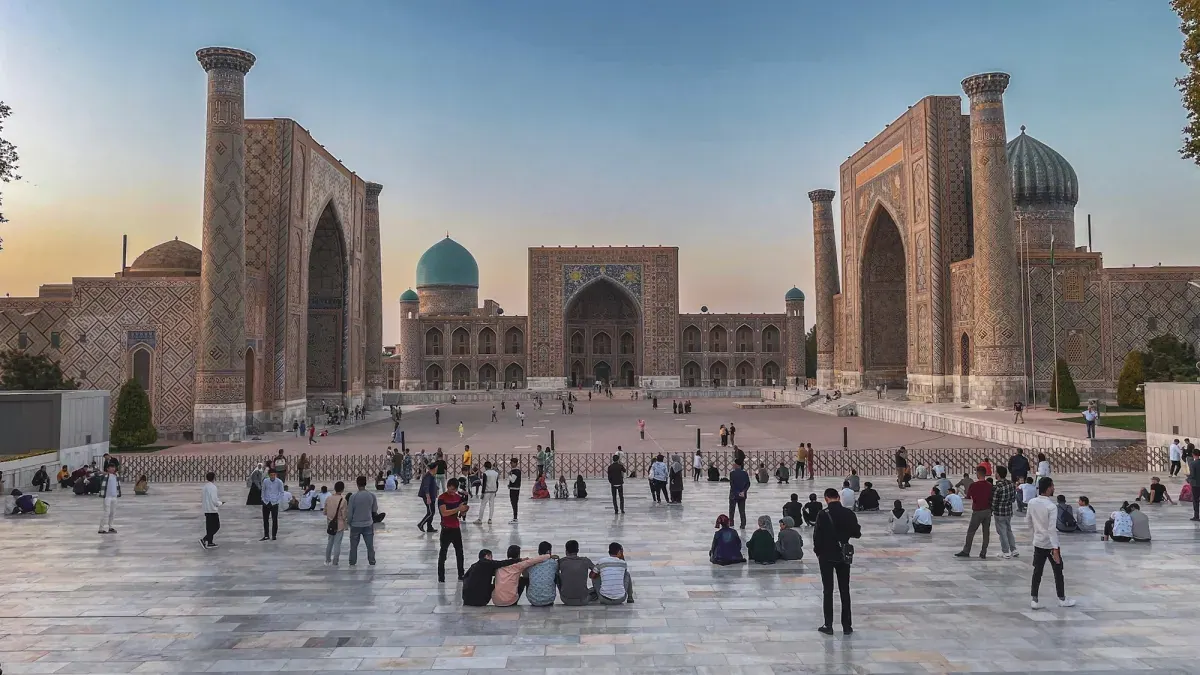
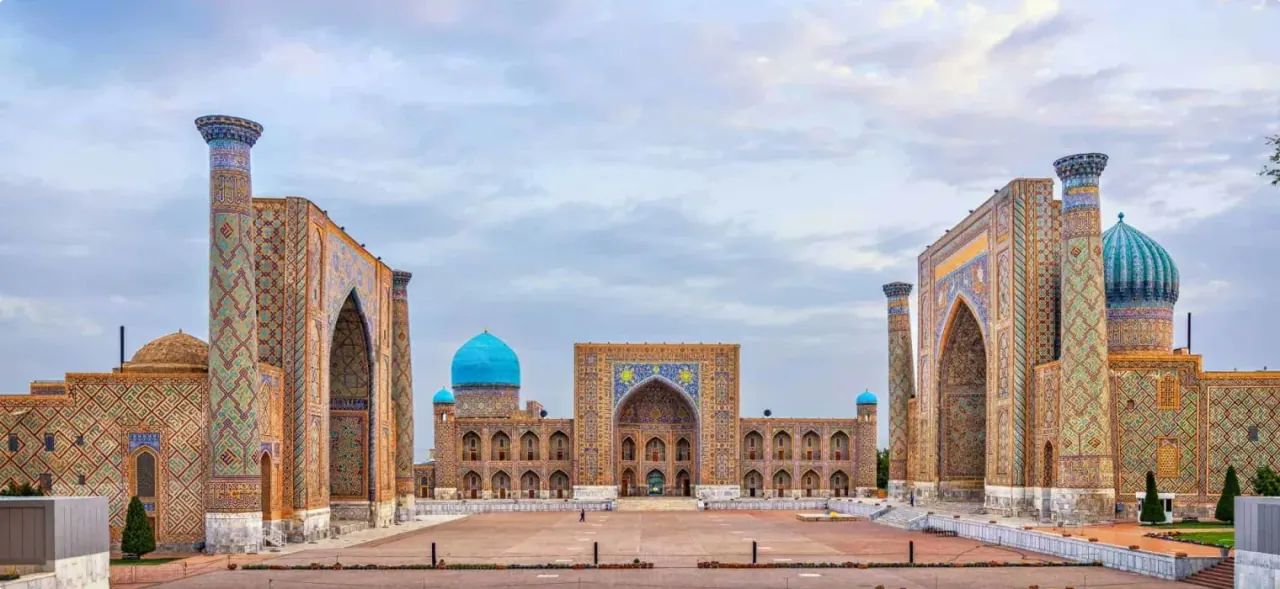
Weddings take place throughout the year but are especially frequent in autumn, after the harvest. Travellers sometimes see bridal processions in front of monuments, particularly on Registan Square in Samarkand.
Harvest and seasonal traditions
Uzbekistan’s agricultural calendar still shapes daily life. Late summer and autumn bring melons, grapes, pomegranates and other fruit to the bazaars, and many families prepare preserves and dried fruit for winter. Some regions hold festivals celebrating local produce, crafts and folklore; dates and formats change from year to year, so ask us what is on during your trip.
National holidays
Uzbekistan’s main public holidays include:
| Date | Holiday |
|---|---|
| 1 January | New Year’s Day |
| 8 March | International Women’s Day |
| 21 March | Navruz |
| 9 May | Day of Remembrance and Honour |
| 1 September | Independence Day |
| 1 October | Teachers’ and Mentors’ Day |
| 8 December | Constitution Day |
| Varies (lunar calendar) | Ramazon Hayit (Eid al-Fitr) |
| Varies (lunar calendar) | Qurbon Hayit (Eid al-Adha) |
Additional days off may be declared each year by government decree, so check the official calendar for your travel dates.
Music and cultural festivals
The best-known international event is Sharq Taronalari (“Melodies of the East”), a music festival held on Registan Square in Samarkand, usually every two years since 1997, with musicians from many countries performing traditional music. Editions are announced by the Ministry of Culture; there was a gap between 2019 and 2024.
Other festivals celebrate crafts, folk music, dance and local food in different regions, among them the spring folklore festival of Boysun, whose cultural space is recognised by UNESCO. Dates and programmes vary, so please confirm current information before planning your trip around an event.
Religious festivals
Ramazon Hayit marks the end of the month of fasting (Ramadan), and Qurbon Hayit is the Festival of Sacrifice. Families visit relatives, share festive meals and give to those in need. During Ramadan, most restaurants in tourist areas stay open, but it is respectful not to eat or drink conspicuously in front of people who are fasting, especially in traditional neighbourhoods.
Travelling during festivals
- Book trains and hotels early around Navruz, Independence Day and the Muslim holidays.
- Expect road closures and changed opening hours around official celebrations.
- If invited to a family celebration, accept with pleasure: it is a great honour and an unforgettable experience.
Frequently asked questions
Is Navruz a good time to visit Uzbekistan?
Navruz on 21 March is a joyful time, with festivities in parks and neighbourhoods and special dishes such as sumalak. It is a public holiday, so some offices close and domestic travel can be busy. Book trains and hotels early.
Are sights open on public holidays?
Most museums and historic sites stay open, but opening hours can change, and central squares may be closed for official events, especially around Independence Day. Check with your guide or tour operator.
When are the Muslim holidays?
Ramazon Hayit (Eid al-Fitr) and Qurbon Hayit (Eid al-Adha) are public holidays whose dates move about 11 days earlier each year because they follow the lunar calendar. The official dates are announced each year.